
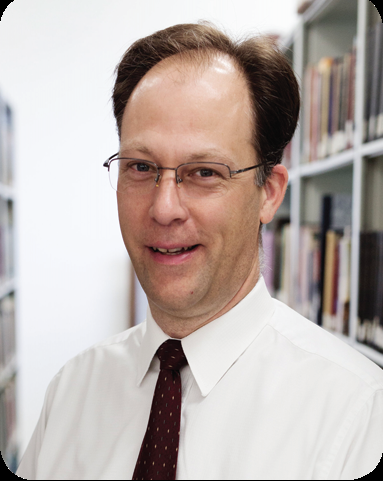
Rev. Smit is pastor of the Protestant Reformed Church in Doon, Iowa. He is also secretary of the Foreign Mission Committee.
The Foreign Mission Committee (FMC) of the Protestant Reformed Churches in America once again presents to the readers of the Standard Bearer an overview of the foreign mission work of our churches since our last report.
The committee is composed of eight members from the Doon, Edgerton, and Hull Protestant Reformed Churches. The members from Edgerton are Mr. Allen Brummel and Rev. Daniel Kleyn. The members from Doon are Mr. Jim Hoogendoorn, Rev. Richard Smit, and Mr. Peter VanDenTop. The members from Hull are Rev. Steven Key, Mr. Alvin Kooiker, and Mr. Don VerMeer. We usually meet as a committee about every 5 to 6 weeks to conduct the denominational work of foreign missions.
The Lord has again given us much work to do. The work continues to focus on the mission field in Accra, Ghana, and the investigatory and developmental work in the Philippines. The work has been enjoyable, particularly from the viewpoint of witnessing those among whom we labor begin to understand and grasp the distinctives of the Reformed faith. Indeed, our churches have a blessed privilege of being used by the Lord in a small part of His harvest.
Rev. Richard Moore continues as our foreign missionary on the Ghanaian mission field. His monthly reports and regular newsletters provide a thorough picture of the mission work being carriedout on the field. Rev. Moore continues to preach from the Heidelberg Catechism regularly each Lord’s day in the evening services as well as preaching from particular passages of Scripture. Recently, Rev. Moore has preached the following sermons (themes and texts) in the mornings: “Made Near by Christ’s Blood” (Eph. 2:11-13); “Risen According to His Word” (Luke 24:4-8); “The King Coming in Meekness” (Matt. 21:1-11); “Christ Made Naked” (John 19:23, 24); “Needed Redemption Divinely Determined” (Ps. 135:6 and Eph. 1:7); “Hated Without a Cause” (John 15:25); and, “More Precious Than Gold” (I Pet. 1:7). Usually, the preaching is translated into the language of some of the people who cannot understand the English. Thus, the Word is preached; the seeds are sown by means of our missionary’s preaching; and, we wait upon the Lord for the increase.
In connection with the preaching of the Word, Rev. Moore also leads a Bible Study on Tuesday night, leads a Bible Study on Wednesday night in Ashaley Botwe, gives a live radio program on Thursday nights, teaches two catechism classes, and also does pastoral work among the mission fellowship.
Both Bible Studies are currently studying the book of Galatians. The Bible Studies prove to be a good time for our missionary to explain carefully the Scriptures and the Reformed faith as well as to answer the questions and issues of importance to the people. By these means, Rev. Moore is guiding the mission fellowship into a greater understanding of the Reformed faith and practice.
The Thursday night radio program continues to go well. Recent topics of the program were Philippians 2:1-11, forgiving our brother seventy times seven, sovereign salvation, the sovereignty of God and inspiration of Scripture, and the crucifixion of Christ with the two thieves. Some programs have been entirely devoted to answering questions from the listeners concerning previous programs. Rev. Moore has even conducted an open forum program in which listeners could call in and ask their questions. Usually, however, the program consists of a 15-minute speech and a 15-minute segment for questions and answers. Usually during the question and answer segment of the programs, listeners call with their questions.
Rev. Moore conducts two instruction classes with young people and children. The children are taught from the doctrine and Bible history catechism books which are used by our pastors in our local congregations. The Bible history class has been studying from the Old Testament for Juniors book, while the doctrine class has been studying from the Essentials book.
As a result of all this work in Accra for nearly two years, the missionary reports that there is progress among the mission fellowship in understanding the truths of the Reformed faith. The mission group is composed at present of six families who regularly attend. This includes a couple whose marriage was solemnized by Rev. Moore during a worship service in our mission group. Other couples, parts of families, and individuals attend. Regarding those who attend our mission fellowship, the missionary concluded in his annual report that there are the beginnings of a nucleus of men and women for preparing to establish a congregation here in the future.
Some changes have taken place on the mission field in the past few months.
First, the mission fellowship is now meeting in a new building in a new location. The new mission building is located in Ashaley Botwe. According to our missionary, the building is very conducive to all the activities of the fellowship during the week and especially for worship on the Lord’s day. The missionary is very thankful for this new change on the mission field since it provides a better place to preach and worship for the mission fellowship.
The second change is the move of the mission home. Currently, the Moores and the missionary assistants are living in Madina, an outlying district of Accra. By the end of April, they will have settled into a new place in Ashaley Botwe. From this house, they will be within walking distance of the new mission building. As a result, the central point of our mission field is now being established in the Ashaley Botwe area, another outlying district of Accra. One of the factors for moving the focus of the mission work to Ashaley was the fact that a large majority of the members of the mission fellowship live in Ashaley Botwe area.
The third major change on the field in the past year is the change in our volunteer assistants. Gone from the field are Mr. and Mrs. John Bouma, who spent over a year and a half on the field. John and Judy are members of our Grandville Protestant Reformed Church. We must point out that John was chiefly responsible for the construction of the new mission building in Ashaley Botwe. We thank him for his time and effort in building a new place of worship for our mission fellowship. After serving the missionary, his wife, and the mission group through April, the Boumas felt that it was time to give the work of being assistants to the next volunteers. We heartily thank the Boumas for their service and assistance to the Moores and the mission fellowship.
Since the middle of April, Mr. and Mrs. Arnold Bleyenberg have lived in Accra. Arnold and Charlotte are members of our Edgerton Protestant Reformed Church. According to early reports, the Bleyenbergs are adjusting well to the culture, climate, and their new role as missionary assistants. They will be helping the Moores to move to Ashaley Botwe at the end of April. Once moved with the Moores to Ashaley Botwe, the Bleyenbergs will make their Ghanaian home in a separate dwelling near the missionary’s house. We express our thanks to the Bleyenbergs for their willingness to devote some time in their life to assisting the missionary on the Ghanaian mission field.
The FMC thanks our churches for the faithful support of our missionary assistants through the many offerings that were taken the past year. The cost of the Ghanaian volunteer assistants amounts to a little over $20,000 per year. So far the offerings have kept pace with the travel and living expenses of the missionary assistants.
The FMC and Hull council spent time investigating the workload of Rev. R. Moore. A committee of the FMC and Hull council visited the field in November 2000 to see firsthand the amount of work that Rev. Moore does. After discussion and study, the FMC adopted Hull council’s recommendation to propose to synod that a second missionary be called to labor in Ghana. The reasons for a second missionary are, first, the workload of Rev. Moore shows that a second missionary is necessary. Second, the fact that Rev. Moore is nearing the age of emeritation makes having a second missionary on the field before he retires wise. To make a transition from one missionary to the next on a mission field of this nature seems to require that the transition be made orderly and before Rev. Moore seeks emeritation. Finally, the scriptural principle of sending missionaries two by two supports the proposal to have two missionaries on the field.
The FMC, upon Hull’s recommendation, is also proposing to synod that the second missionary labor as time and opportunity permit in other areas in Accra or in Ghana. Clearly, the important task at hand is to establish the group in Ashaley Botwe as a Reformed congregation. However, the FMC’s proposal recognizes that as the Lord leads us, He may grant us an open door to develop the mission work beyond the city and suburbs of Accra. Already by a few occasional visits to outlying villages, Rev. Moore reported that there were possibilities for future work in places beyond the city and suburbs of Accra.
What is interesting to remember about the mission field in Ghana is that it started without any prior group there. This method of foreign mission work, adopted by synod 1996 when it declared Ghana a mission field, was a new mission method for our churches. From the small beginning of only three in attendance under the preaching on July 11, 1999, the attendance under the preaching of the gospel has now increased greatly, so that a new mission building now adequately accommodates the large attendance under the preaching. Although we do not set our hearts upon numbers, yet our prayer is not only that our missionary may continue to preach the gospel of Christ distinctively, antithetically, and boldly, but also that Christ by His Spirit may continue to gather under the preaching His people unto faith and repentance in our Lord Jesus Christ.
In comparison to the method of mission work in Ghana, the method of the future mission work in the Philippines is different in the Lord’s providence. The method which will be used in the Philippines, the Lord willing, is not to start a mission work in the Philippines “from scratch,” but rather to work with the present groups in the Philippines whom the Lord has brought into contact with us. This is the same method used on the mission field in Singapore in the ’80s.
How long have we known the groups of contacts in the Philippines? With the churches in the Labo area we have had contact for many years. They are mostly from a Baptist background. The pastor and the members of the Bible Fellowship in Cagayan de Oro City have had contact with our churches for many years. Since 1998 we have known a group in Manila which seceded, on the basis of their understanding thus far of the Reformed faith, from a congregation of the World Wide Church of God. Also since 1998 we have worked with a group in Bacolod, who are mostly from a Reformed background. Our work in the Philippines the past year focused on these four areas of labor.
The work in the Philippines was carried out mostly by two delegations, one sent in August 2000 and another in February 2001. Although the FMC carried out correspondence and literature distribution in the Philippines, the bulk of the work was carried out by the two delegations. As before, both of the latest delegations to the Philippines included a member of the FMC. This has provided valuable insights and ready-at-hand information for the FMC during its meetings in Northwest Iowa while deliberating on the future of our work in the Philippines.
The first delegation, which visited on August 9-22, 2000, consisted of Rev. Rodney Miersma, pastor in our Immanuel Protestant Reformed Church, and Rev. Richard Smit, pastor in our Doon Protestant Reformed Church. They spent about two weeks in the Philippines, laboring among contacts in Manila, Bacolod City, Cagayan de Oro City, Daet, Labo, Jose Panganiban, and Capalonga. Topics of the lectures centered in the doctrines of eschatology and on other topics which the contacts specifically requested. Preaching was also provided among the contacts in Labo, Capalonga, and Jose Panganiban on the first Lord’s day and in Cagayan de Oro on the second Lord’s day.
Rev. Miersma and Rev. Smit, who had both visited the Philippines on previous delegations, found that there had been developments on the field. Some former contacts were no longer interested in the doctrine and distinctives of the Reformed faith as taught and practiced by our churches. However, others showed a continued desire to grow in the doctrine and distinctives of the Reformed faith as taught by our churches. All of our contacts showed an interest in and a desire for a missionary from our churches to come. As a result of its investigation and developmental work, the delegation concluded that there was full-time mission work for our churches in the Philippines.
Because the first delegation had concluded that there was a need and a desire for a PRC missionary among our contacts in the Philippines, the second delegation was given the mandate to find out where the missionary would possibly locate and what the nature of the possible missionary’s work would be. This mandate was fulfilled by Rev. Wilbur Bruinsma, pastor in our Kalamazoo Protestant Reformed Church, and Rev. Daniel Kleyn, pastor in our Edgerton Protestant Reformed Church.
The brethren were in the Philippines earlier this year for fourteen days, from February 12 to February 26. They spent themselves in their labor, preaching on both Lord’s days, giving 11 speeches, and conducting 13 formal and informal meetings with leaders or members of the current groups and with a contact from Surigao City, whom we have known since 1997. The delegation centered its lectures and preaching in the doctrines of the covenant. As other delegations have done, the delegation led open forums in which our contacts were free to ask any pressing questions they might have, or have the delegation provide advice on urgent matters.
The delegation did witness some opposition to our presence in the Philippines. Some of our contacts in Manila and Daet have been told that our churches are hyper-Calvinist. However, this opposition has forced our contacts to judge for themselves whether the charge against us is valid. The opposition seems to have strengthened the resolve of our contacts to stand with our churches in the distinctives of the Reformed faith.
Based upon the several requests for a missionary specifically from our denomination and the positive developments in the Philippines, the delegation concluded in its report to the FMC that there is an urgency to send a missionary to labor in the Philippines.
In light of the work and recommendations of the delegations, and in light of the direction given to the FMC by synod 2000 regarding the Philippines, the FMC is proposing to the coming synod that the Philippines be declared a mission field of our churches. The FMC is proposing the missionary base his labors among the Berean Church of God (Reformed) in Manila, but then also make periodic visits to the Body of Christ Bible Churches (Daet/Labo area), to the fellowship in Cagayan de Oro, and the fellowship in Bacolod City for instruction and preaching. To the FMC and our contacts it is obvious that there is more than enough work for one missionary to do, but the groups in the Philippines have expressed the willingness to do whatever is necessary to share the missionary so that all might benefit from his instruction in the Reformed faith.
This annual review shows that there is work for our churches to do among peoples of different race, language, and culture. It appears to the FMC that the Lord is granting us another field of foreign mission labor in the Philippines.
It becomes evident that our churches must face some important questions in the coming synod.
Can our denomination properly maintain two foreign mission fields? We have never before in our history had two foreign mission fields under the jurisdiction of the Foreign Mission Committee. Do we have not only the desire to continue to witness of the rich heritage, which God has given us and marked out for us with gracious care, but also the ability and means to fulfill the work on two foreign fields?
Can the churches provide three foreign missionaries: two to Ghana and one to the Philippines? Do we have the ministers to carry out the work? This question of manpower immediately arises in our hearts and minds because of the several current vacancies in our churches and imminent retirements. How shall we respond to the on-going reality that “the labourers are few” and “the harvest truly is plenteous”?
Do we have the funds to support two foreign mission fields with three foreign missionaries? The FMC knows firsthand that foreign mission work is not free, but requires lots of money. Synod will find that the proposed 2002 budget for foreign missions is noticeably higher than the current year’s budget because of the proposals for Ghana and for the Philippines. This increase will most likely require an increase in our synodical assessments. Are the churches willing and able to support this?
These are some of the questions.
For the answers, may we as churches trust in the Lord with all our heart for God’s wisdom to be our guide.
The FMC covets your prayers as we labor on behalf of and with our churches for the cause of the Lord’s kingdom and covenant in foreign missions.

