
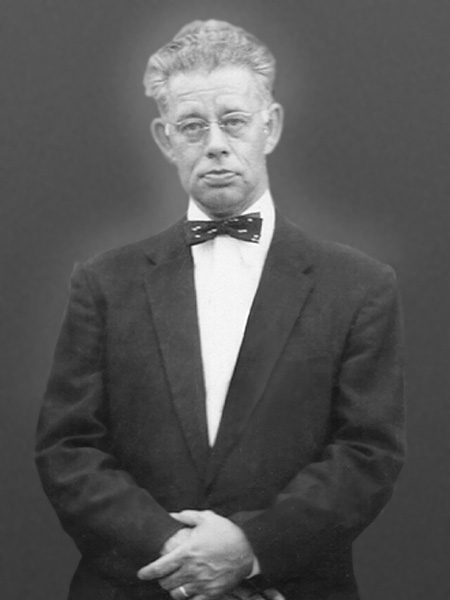
John A. Heys is a minister emeritus in the Protestant Reformed Churches.
The prophet Jonah loved God’s church as she existed in the day of shadows. His sin in trying to flee to Tarshish was not that he was carnally attached to the fleshly seed of Abraham, the nation of Israel, and was moved by a patriotism and nationalism like that which any unbelieving citizen can have for his country. His sin was not that he had no use for God’s church, or for the growth of that church. He wanted God’s love, mercy, and grace to fall richly on that church; and he wanted nothing to happen that would threaten the well-being of the church he knew in that day. He sincerely wanted the glorious kingdom to come, on whose throne a son of David would sit, ruling the whole world from out of Zion. That glorious kingdom he wanted to be realized.
Because of this, Jonah could not understand how God could want to save the capital city of the nation that was the fiercest enemy of the nation wherein God’s church was to be found in that day. He wanted destroyed the chief city of the nation that to him was the greatest threat to the church of his day. And his sin was that he disobeyed God’s command to go and preach there, and that he sought to frustrate God and to prevent Him from saving anyone in that city. He had therefore to learn to know God’s sovereign love for all His church, a love that reached far beyond Abraham’s seed, and would gather in an host of Gentiles, while the number of Abraham’s seed in that church would greatly diminish. He had to see that Nineveh’s salvation was a shadow of Christ’s coming kingdom wherein Gentiles would have a very large place, and have a new Jerusalem as its capital city.
The lesson Jonah must learn therefore was that to love God, he must see God’s love as a sovereign love. It is a love that man may not limit. Man may not tell God whom He may love and save. God has the perfect and absolute right to love whom He will, and to hate whom He will. No creature, whether he be man or angel, may deny Him that right. And we simply duplicate Jonah’s sin when we deny Him the right to elect unto everlasting life whom He will, and to reprobate to everlasting damnation whom it pleases Him to predestinate to that woe. He may hate Esau and all the seed of the serpent. And we may not distort Scripture in Romans 9:13 to make it read thus, “Jacob have I loved, and Esau have I loved not quite that much.” Or, “Jacob have I loved and Esau have I loved less.” The word hate which Paul uses is the same word that Jesus used when in John 15:25 He said that they hated Him without a cause. Their hatred brought Him to His cross; and it was not a love that was a bit less than what they had for Barabbas. Hatred is the opposite of love, and it is not a shade or weaker form of love. No, God hated Esau, and that sovereignly, before he was born or did good or evil. Do not try to be a Jonah and pick out for God whom He may love and save.
We err grievously also when we maintain that God hates sin but not the sinner. This is impossible, for sin always is an act of a person. If the person is not there, there is no sin. A tree falls upon a man and kills him. No sin has been committed. A man in anger hits another and kills him. Then you have sin. Besides, in effect we call God a liar when we say that He hates sin but not the sinner. Through the psalmist in Psalm 5:5God Himself declares, “The foolish shall not stand in Thy sight; Thou hatest all workers of iniquity.” Note that He does not merely hate iniquity, but the workers of iniquity. And this is not merely Old Testament language and notions. In Ephesians 5:6 we read, “Let no man deceive you with vain words; for because of these things cometh the wrath of God upon the children of disobedience.” Note: upon children, not mere disobedience. There is no “common grace” that rests upon the wicked; but wrath rests on them. The foolish do not stand in God’s sight in a certain favor, and with a smile on His face. They shall not stand before Him; and that means He will drive them to the lake of fire. Let us not argue with God. For we perform an act of hatred against God when we contradict Him, and deny Him His sovereign right to hate the sinner whose sins have been blotted out by His Son’s blood; and He may decree that His Son will not die for them.
With Jonah it was a case of denying God His right to love the elect in Nineveh for whom Christ would die. It was not God’s wrath against sinners that Jonah questioned. He objected to Gods love that He had and intended to show to Gentiles in a city far removed from the land that in the day of shadows was where the church was established. Therefore he tried to flee from the presence of God and to try to prevent Him from working salvation there and upon these people. He thought that he was seeking the good of the church that he loved. In actuality he was performing a deed that, if carried out and successful, would hurt the church. He was actually objecting to the kind of kingdom of Christ that God had eternally decreed and that was eternally in His heart and mind. Indeed, Jonah has something he must learn.
But there is another element we must keep before us. Not only did Jonah not recognize God’s sovereignty in His love; but he showed no love for these Ninevites whom God intended to save, and who belonged to the same church to which Jonah belonged. Jonah should have seen that God had people there that He loved. It was love that sent them a warning. That in itself revealed that He wanted to save them and not destroy them with the city. Jonah therefore should also have had pity on these people, and in love rushed over there to warn them. Whom God loves, we certainly must also love. Upon whom God shows mercy, we by all means should show mercy. But Jonah had none for these Ninevites, whom God sought to bring to repentance and salvation. He must learn to have pity and compassion for others, and to help them, when he can in the midst of their woes.
God in His wisdom, but also in His love for Jonah, so orders his life that he learns his lesson, be it in a way hard for his flesh. According to God’s counsel and eternal plan for him, Jonah boards a ship to go to what at that time was considered the western end of the world, namely, Spain. And here too is an amazing thing in Jonah’s life. Jonah wanted nothing to do with the Gentiles in Nineveh whom God was pleased to warn. But he was eager to make use of the Gentiles who ran this ship. He coveted their help in his walk in sin. He was not interested in seeing Gentiles saved; but he was eager to have Gentiles serve his own flesh.
And God, Who works in a mysterious way His wonders to perform; Who plants His footsteps in the sea, and rides upon the storm, taught Jonah by a violent storm at sea. Jonah had gone down into the hold among the cargo and had fallen into an unnaturally deep sleep. This not only pictures his utter unconcern for the peril of the Ninevites, but must be seen as God’s way of love for both Jonah and the Ninevites. This was no ordinary sleep. Jonah was a landlubber, and this could very well have been his first long voyage by sea, if not his first storm at sea. The God from Whose presence Jonah was fleeing was right there in the storm, in the ship, and in the deep sleep that fell upon Jonah.
What an unusual and wholly unnatural event we have here! The tossing ship, lifted up and cast down by the waves, the creaking and groaning of the wood that made up the ship, the noise of the sailors all around him dragging and throwing the cargo overboard, the cries of the sailors to their gods, and their screams of fear do not effect Jonah one bit. He sleeps on and on, wholly unaware of the fact that those with him on the ship, and he himself, are in mortal danger. Truly God gave him this deep sleep. It was not natural.
The shipmaster had to come and awaken Jonah and urge him to pray to his God. Wide awake now, Jonah does not do as requested. He does not pray to God so that these sailors “perish not,” as the shipmaster had requested. He who wanted to see the Ninevites perish is now asked to pray that other Gentiles be kept from perishing. And now it was not a matter of perishing in forty days. It could be that in less than forty minutes the ship would break apart; and they would all die at sea! Crying to their gods did not help; but the mariners saw one ray of hope. Perhaps the God of this Hebrew could save them. He was therefore awakened, but did not pray to his God.
Jonah did not pray to God because, in His love to Jonah, God made him see that the storm was because of his sin. He had learned one part of his lesson, namely, that he could not flee from God’s presence; and that he committed a great sin in trying to frustrate God and to flee from his calling. He who sinned in order to try to keep God from saving other sinners, is given to see that Gentile sinners on the ship—for their idolatry was very plain—would perish because of his sin. He saw that he must die, if these seamen were to escape destruction. He could not pray to God to bring the storm to an end, for he now realized that he deserved to die for his sins. He does not see it yet, but the foundation is laid for him to learn later that the Ninevites would perish because of his sin of fleeing, and of not warning them as he was called to do. Now he does see that the mariners would die because of his sin, and that he should be thrown overboard.
The finger of God pointed directly to him when the sailors cast lots to find out who was to blame, and God guided the lots to point to Jonah. Yes, that too was God’s work, and it was a work of love that brought Jonah to confess his sin before these Gentiles. He does not however volunteer. He does not tell them that he will jump overboard and so save their lives. And the sailors hesitate casting him into that raging sea. Jonah had told them Who his God is, and that God is the God of heaven Who hath made the sea and dry land; and that he was trying to flee from Him rather than do His bidding.
Upon hearing this the sailors strove harder in an attempt to reach the shore and safety. When the storm increased and the ship seemed ready to be broken in pieces they pray that they may not be held guilty of Jonah’s blood, if they throw him overboard. They fear this God of heaven Whom Jonah had introduced to them. And it is hard to understand how calm Jonah remains through it all. He faced death for a gross sin which he had committed. He was in a position wherein he would drag others to death with him because of his sin. But he does not jump overboard to save them, even after confessing that it is all his fault.
How different this is from our Savior Who “steadfastly set His face to go to Jerusalem” where He knew He would be crucified! How different from His surrender in the garden, after He showed them that He could cast them backward to the ground and walk away unharmed! How different from His refusal to come down from His cross, when taunted, even though it would have been a simple matter for Him with His almighty, divine power to do so!
It is true that Jonah did not know that his life was going to be spared by a fish which God prepared for this work. But put yourself in Jonahs place and face death in a few minutes because you have rebelled against God, tried to frustrate Him, and tried to flee from His presence, only to find Him right there before your face with all His terrible power and hatred of sin of all kinds!
Do not excuse Jonah’s sin; but do have compassion for him, even as he should have had compassion upon the Ninevites, whom he was to tell that God was right there before them with His sword, and whom he was therefore to warn and call to repentance. Jonah had learned part of his lesson, but there is so much more for him to learn.

