
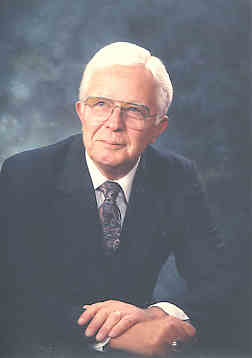
Warren W. Wiersbe in a Foreword writes the following about the author:
“George Matheson was blind, but with the ‘eyes of his heart’ he could see farther and deeper than most of us. This was especially true when it came to penetrating the minds and hearts of the great Bible characters’. . . .
“Matheson was born in Glasgow, Scotland, March 27, 1842. Early in his life, his eyesight began to fail; but he managed to complete his basic schooling with the aid of strong glasses. From that time on, he had to have assistance with his studies; and his two sisters nobly stood by him. He earned two degrees at the University of Glasgow, felt a call to the ministry, and was licensed by the Glasgow Presbytery on June 13, 1866. He became assistant to J.R. McDuff, the well-known devotional writer, and then accepted the pastorate of the church of Innellan. He was ordained on April 8, 1868.
“Like many young preachers at that time, Matheson experienced a personal ‘eclipse of faith and even considered abandoning the ministry. His church officers were understanding and compassionate and advised him to stay on and give God an opportunity to deepen his faith. In due time, the young minister came out of the furnace with stronger faith and a deeper understanding of Gods eternal message.
“It seems incredible that a blind minister in that day could accomplish all that George Matheson accomplished. He became an outstanding scholar and theologian, as well as a gifted devotional writer and preacher. Others, of course, read to him; but it was he who assembled the materials and prepared each message. He memorized his sermon, the Scripture lessons and the hymns; and it was said that he never missed a word! He was diligent to visit his people and enter into their joys and trials. In every way, George Matheson was a devoted pastor and teacher.”
We are also informed in the Foreword that Matheson was the author of the hymn, “O Love That Wilt Not Let Me Go.”
This Scottish Presbyterian author, it is plain, was a very unusual man. And I believe his unusual character and circumstances are reflected in his writings and in his very interesting style.
Now about the books. The Second Series is sixteen chapters about as many Old Testament men, from Ishmael to Daniel. The Third Series, after an Introduction, contains fifteen chapters about as many New Testament men, from John the Baptist to Paul. I have not read these books from cover to cover, but sampled a few chapters from each. My general impressions are: 1) That neither volume is exegetically strong and solid; in fact, there are many points at which I would place a question mark. 2) That, on the whole, the Portraits of New Testament men are more accurate than those of Old Testament men. With regard to the latter the author is at times far off base. His case for characterizing Caleb as “the Explorer” and Isaiah as “the Philanthropist” is very weak and not Scripturally grounded. This stands related, of course, to the lack of exegetical foundation.
Nevertheless, if you can discern and overlook some of these flaws, there is some interesting devotional reading in these Kregel reprints.

