
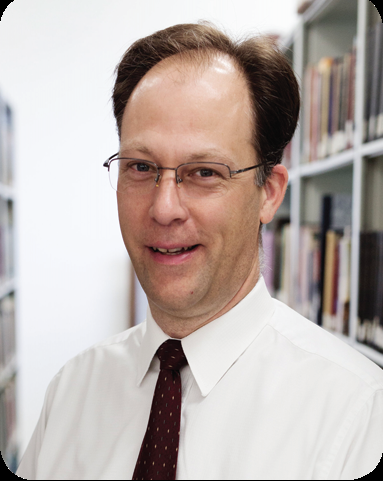
Rev. Smit is pastor of the Protestant Reformed Church in Doon, Iowa.
Would you have given the second coin?
By nature both we and the poor widow of Mark 12:41-44would have kept the second coin. By nature we do not love God so much that we would have given the second coin. “Me” always comes first. We will try to get away with robbing the Lord’s treasury as much as we can, before we will ever be forced to give to it. We will not give sufficiently unless we really have to or unless it comes to the point, for example, that our schoolteachers are starving, or the school will close tomorrow if we do not give today.
How desperately we need the mercy of God to rescue us from robbing His treasury of the means to support the ministry of the gospel, the poor, and the cause of covenant instruction in our homes. How earnestly we need to seek God in humility and repentance for His grace and Spirit to give what is required and to give in true thanksgiving, like the poor widow.
Giving as she did, by the grace of God, means that we fill up the treasury of God. It means that we teach our children and young people to give already when they begin to make an income from odd jobs. We teach them that giving unto the Lord is not a burden, but a privilege. After all, it is a privilege to give unto the Lord what He has given to us as an undeserved blessing in Jesus Christ.
In that way of faithful giving there is a blessed expectation. Scripture teaches that there is a blessed expectation in giving faithfully to the Lord as illustrated by the poor widow.
Immediately, we in unbelief would object to the truth that there was a blessed expectation for the poor widow in her sacrificial, self-denying, and spiritually complete giving. By nature, we would judge that poor widow as very foolish because the lot of the poor widows in those days was terrible. The widows had not only a very hard life because of their loneliness, but also had a very oppressive life financially. Seeing the poor widow throw in both coins, we would judge her as foolish. She was giving away her daily bread to the temple treasury! She was risking hunger! How could there be any advantage and blessed expectation in that kind of giving? Our old, corrupt nature would judge her as reckless.
However, the fact is that our old corrupt nature is a fool. We say by nature that all our things are “mine.” We will give to the Lord on our own terms according to our own wisdom. We behave most often like a spiritually greedy octopus: clinging with all our arms and tentacles to all our possessions, not willing to let even one penny go, except for our own vainglory and pride.
We are prone constantly to ignore willingly that all our possessions are the Lord’s, and that all our coins, right down to the last two pennies, are not our own, but belong unto the Lord. We are required to use them as good stewards, and be ready to give them unto the Lord cheerfully, faithfully, liberally, sacrificially, and in humble gratitude unto the Lord.
To do that requires the painful death of the old man of sin, because it is impossible for us to see the wisdom and blessedness in the poor widow’s giving. For that painful death of our covetous old man of sin, we stand in absolute need of the Spirit and grace of our Lord Jesus Christ to purify us in that life of giving even our last two coins, if necessary, in gratitude to our God.
Then, by the Spirit’s work in our hearts, we learn the heavenly wisdom of true, faithful giving. The man of wisdom understands the necessity of the financial sacrifices needed to maintain our own parental, covenant schools for the instruction of our covenant youth in the fear of Jehovah. He realizes that the world calls such giving an oppressive bondage and financial suicide, but he regards that spiritual sacrifice for the covenant seed as a duty, a privilege, and a spiritual investment. Therefore, he sows his seeds liberally. He casts his bread liberally upon the water. He gives in true thanksgiving unto the Lord, knowing that he shall inherit the earth and that he and his spiritual seed are heirs to a spiritual fortune whose wealth cannot be calculated. The man of wisdom gives with his heart in the assurance that he and his seed will possess very soon the full wealth and glory of the Lord in His everlasting kingdom in the heavenly Canaan.
That is the blessed expectation upon which we set our eyes of faith as we truly give unto the Lord in our worship.
In that expectation, the poor widow could expect confidently that the Father would continue to provide for her in this life. She expected that the Father would provide her daily bread. She did not worry about her daily bread. She was given the spiritual courgage to trust in the Lord completely, not only for her salvation, but also for her daily bread. When having to part with that second coin, she in her faith did not worry about hunger, starvation, or death. She gave willingly and did not fret about tomorrow. To paint her contentment and trust in modern terms, we would say that she did not worry when giving both coins that her electricity would be turned off, that the telephone service would be cut off, or that she might have to go through the day with one less meal.
Yet, that is exactly what we sinfully worry about.
We worry about what will happen to us if we give too much. Part of the problem is that we expect to have certain things in life. We have become so accustomed to the affluence of our day, that we expect a certain level of living as though we have a right to certain kinds of possessions and a right to a certain amount of possessions. On that basis, we worry that we will give too much and then be left with not enough for ourselves. We worry sinfully that we will have to forgo the savings account or spend the retirement funds to support the kingdom causes. In that worry we are prone to hold on to that second coin as long as we can. We are prone, for example, with respect to the church budget to calculate to the last penny what is our share of the budget so that we do not pay a penny over our share, even though we may have the God-given means at our disposal to give much more. We think we have to make sure that we have enough first.
But, that is wrong. By doing so, we are not only robbing God of the gifts that we should be giving freely and liberally, but most importantly we are robbing Him of the thanksgiving and honor due His name. The sinful hesitancy in giving what God demands and what God deserves at the offering plate is not according to the example of the poor widow. That’s not the kind of life of gratitude to which Christ has redeemed us. We have been redeemed unto that life of gratitude and called unto that kind of giving as stated inMalachi 3:10, “Bring ye all the tithes into the storehouse, that there may be meat in mine house, and prove me now herewith, saith the Lord of hosts, if I will not open you the windows of heaven, and pour you out a blessing, that there shall not be room enough to receive it.”
It is upon that promise that the faith of the poor widow stood. That is true because true faith always stands upon the promises of God and in obedience to the commands of the Lord.
The Lord commands us to seek His kingdom even in our giving. We are called to seek God’s kingdom by our faithful giving in worship. We are called to seek the kingdom of God by supporting the ministry of the gospel and the seminary. We must see to it that the poor, whom we always have with us, are properly supported. We must seek the kingdom by maintaining our own parental, distinctively Reformed, Christian schools for the faithful instruction of our covenant youth. We must seek the kingdom of God by procuring the necessary earthly means for the support of these things and then seek the Lord’s wisdom to be wise and good stewards of the earthly means God gives us. The bottom line, however, is that the kingdom of Christ must come first in our hearts and minds. Our obligations to these things must be first and foremost. The treasury of the Lord must be first.
When we seek His kingdom first, the Lord promises that He will add all these other things unto us. He will provide us with our daily bread. He will provide us with the earthly means for the maintenance of the gospel and the instruction of the generations after us in His fear.
The Lord will not let His promise go unfulfilled. He will not forsake you, for Christ’s sake. He will provide all that you need in body and soul. And, most importantly, He is pleased to bless you through those earthly means for the sake of our Lord Jesus Christ.
Appreciating that salvation in the shed blood of Christ which God has freely given us and in which He has established us, we will cheerfully and faithfully labor to give freely and thankfully in love to the Lord and for His glory. That is learned in the way of daily conversion by the work of the Lord’s Spirit.
The fruit of His work is the giving of both coins in His fear, like the poor widow.
May the Lord by His grace so work that in us more and more unto His glory.

