
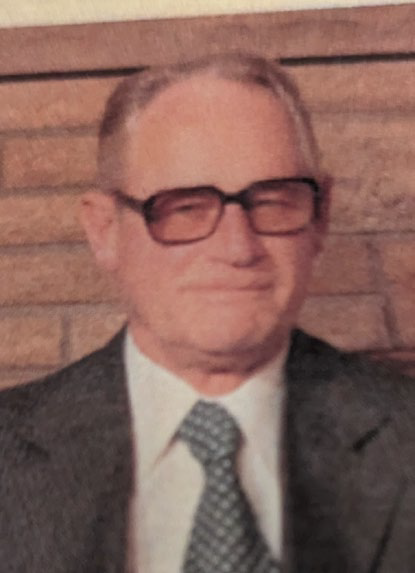
Dr. James Daane, minister in the Christian Reformed Church of Los Angeles, California, a writer for the Reformed Journal, and author of the book titled Theology of Grace, has become a target of criticism from several quarters. Not only have Dr. C. Van Til and Rev. H. Hoeksema taken Daane to task for emasculating their views on the common grace question not only has the Rev. Hoeksema severely condemned Daane’s evaluation of Hoeksema’s view on the sovereignty of God in the relation of election and reprobation to which the editor of The Standard Bearer gave utterance in recent issues of this periodical, nor is it enough that Dr. Ridderbos of the Reformed Church in the Netherlands has expressed himself rather critically of the argument of Daane reviewed in his book Theology Of Grace, but there is much criticism of a serious nature rising against him in his own church.
The last two issues of Torch and Trumpet contain rather lengthy contributions written with a view to acquaint the readers of this paper with the fact that in the opinion of these writers Daane has said too much in criticism of the theology of his own church.
In the December, 1957, Torch and Trumpet, Rev. Edward Heerema, minister of a Christian Reformed Church in Grand Rapids, and member of the editorial committee of Torch and Trumpet, accuses Dr. Daane of having a bad case of astigmatism. It is conceded that Daane sees something wrong with Christian Reformed theology, but because Daane sees with wrong theological glasses, all he sees is distorted.
Moreover, the Rev. Joseph A. Hill, minister of the Reformed Presbyterian Church and teacher of Bible in the Unity Christian High School at Hudsonville, Michigan, writing in the January, 1958, issue of Torch and Trumpet goes so far as to accuse Dr. Daane of neo-orthodoxy, being afflicted with the rationalism of Barth and Kierkegaard. Daane, so the writer contends, wants a reformulation of Reformed theology. Daane’s critic concedes that a Reformed Church should keep on reforming, but he insists, and correctly so, that true reformation “must be a reformation within the bounds of Scripture, not a reformation beyond Scripture.”
Both of Daane’s critics referred to immediately above are reflecting on an article which Dr. Daane wrote in the Reformed Journal of September, 1957, under the title, “The State of Theology in the Church.”
That the reader may know a little of what the argument is about, we quote a little from the artic of Joseph A. Hill where the latter restates the position of Dr. Daane.
“The Christian Reformed Church, he says, is theologically orthodox but theologically dead. Her theology is ‘correct’ but has not been a corrective factor in her life. Theology in, the church has grown stale, stagnant, and lifeless. Evidence of this, says Daane, is her indifference to the vigorous, challenging religious movements of recent times. The Christian Reformed Church has been largely unmoved and untouched by the current renaissance of biblical 2nd theological studies that has been stimulated by such scholars as Barth, Brunner, Tillich, and others. Daane laments the fact that the Christian Reformed Church, with all her emphasis on theology, ‘has made no mentionable contribution to this resurgence of theology, and has done nothing to determine its ‘direction.’ Accordingly, her theology lacks contemporaneousness and her preaching often lacks relevancy to the great issues of our times.’
“What can be done about this state of affairs? Daane replies that ‘our theological plight calls for a fresh reformulation of the theological task and the creation and utilization of a new theological approach achieved in the light of the present and with the aid of what we have learned in the past.’ To be sure, this progress must be based on Scripture. It must be a theology of the Word. ‘Our theology must stand again in the direct light of the Scripture in order to see new light and in order continually to appraise the truth of her formulations. Thus it would appear that Daane seeks to, reform Reformed theology by pointing the way beyond the old orthodoxy toward a new and better orthodoxy.
“Daane contends that the progress of theology in the church bas been hindered by the study of theology itself. The Christian Reformed Church has been engaged in the study of theology for theology’s sake and accordingly has given a larger place to systematic Theology than to Biblical Theology. This, emphasis on a system of theology, says Daane, is particularly evident in the attempt to ‘centralize’ theology by positing divine sovereignty as the master concept around which all other truth is arranged and to which all other truths are adjusted. The theological task, thus circumscribed, is limited in potential and has been long since finished. When theology is conceived of in terms of a fixed system of truth, it tends to become ‘static.’ Further development of theology is impossible once theology is regarded as a finished system of truth. Thus theology in the Christian Reformed Church cannot advance beyond itself because it is conceived of abstractly as a closed system.”
Rev. Hill further asserts “In keeping with his objection to theology as a system of truth, Daane also objects to the emphasis in Reformed Theology on the idea of a plan of God for history according to which God controls everything that comes to pass. ‘Theological self-reflection upon the accepted central doctrine’ (the sovereignty of God) determined the manner in which the counsel of God was defined by the church. “The method which made sovereignty as such the explanation of sin and reprobation, as well as of election, was applied to the counsel of God. Sovereignty per se was now made the explanation of everything, of ‘whatsoever comes to pass.’ Just as sovereignty was reduced to a philosophical concept of causality which made God as sovereign the Ultimate Cause of sin and reprobation, as well as of election, so divine sovereignty was made the Ultimate Cause of whatsoever comes to pass, and whatsoever comes to pass became the Ultimate Expression of God’s Ultimate Will.'” To quote no more of Rev. Hill’s article because of limited space. briefly it is Rev. Hill’s conclusion from Daane’s argument that the latter, for fear of determinism which he concluded may be derived from the Reformed Theological system re the sovereignty of God in His counsel, wants to go in the direction of rejecting God’s counsel as the determining factor in whatsoever comes to pass in history. Rev. Hill believes that Daane, who received his doctorate at Princeton, has imbibed too much of the liberal theological dishes served up at that institution, and he has relished the Existentialism of Kierkegaard and the dialectical theology of Barth. It is Rev. Hill’s conclusion that Daane’s ‘new theological approach’ would lead the Christian Reformed Church not in the direction of orthodoxy but of neo-orthodoxy.
Also Rev. Heerema, as already indicated, has not much good to say about Daane’s new approach. He points up especially three areas in which Daane’s theological vision is distorted. The first is “in his charge that sovereign election has not been sufficiently expressed ‘in terms of Christ as Lord in whom our election takes place, but in terms of God’s sovereignty as expressed in terms of both an election and reprobation apart from Christ.'” Heerema is amazed at how Daane misinterprets the writings of the late professor Berkhof in his Systematic Theology, and accuses Daane of generalizations and of “putting far too much freight on a point, a point seen in distortion in the first place.”
The second area, according to Heerema, where Daane’s vision is distorted is in regard to his conception of the antithesis. Writes he, Daane’s notions as to the ‘antithesis’ are puzzling. He charges that there is present in the Christian Reformed Church an ‘abstract and static conception’ of the antithesis. And this means that ‘the world is eternally divided into eternally warring halves engaged in an eternal conflict in which there is no victory because no decisive battle is ever waged. This conception of the antithesis is wholly static because it is defined apart from Christ and His victorious death and resurrection. Indeed, in this view Christ is merely the executive of this antithesis, not the Savior of the world who abolishes death, sets the devil at naught, and takes away the sins of the world.’
“One hardly knows what to make of such a statement, characterized as it is by reckless language.” Rev. Heerema then proceeds to show wherein Daane uses reckless language and the gist of his remarks comes down to this that Daane is not really criticizing the Christian Reformed conception of the antithesis, but only Daane’s distorted conception of that conception.
Concerning the third distorted area of Daane’s vision, Rev. Heerema writes, “Daane’s distorting vision is nowhere more obvious than it is in his description of the concept of the ‘sovereignty of God’ as related particularly to election and reprobation. This concept, so precious to the Christian of sound Reformed Persuasion, is seen in distortion by Daane as follows: ‘Yet it was not always observed that a sovereignty which in and of and by itself explains both sin and righteousness, election and reprobation, is a sovereignty without any essential ethical character. Such sovereignty is an unqualified, naked power, a brute fact.'” It is at this point that Heerema remarks, “It is to be noted that Daane finds such a notion of God’s sovereignty in the thinking of Van Til and Hoeksema.” Heerema is inclined to believe that Daane has also read Van Til with distorted vision, but as to Hoeksema he writes “we are not minded to enter into his evaluation of Hoeksema, even, though Daane’s remarks on the precise point in question would seem to have a measure of validity.” Heerema drops the subject here because he insists that he is interested only in Daane’s criticism of the Christian Reformed theology. But it would be interesting to know more of what Heerema thinks of Hoeksema’s theology on this point. Perhaps the editor of The Standard Bearerwhen he reads this will not let this pass either without asking for further comment. Heerema doesn’t like sweeping statements, but we don’t either. It were better that Rev. Heerema had not left that statement hanging in the air, and that he had gone right on to show how Daane’s vision of Hoeksema’s theology on this point was 20-20.
Heerema concludes this part of his article with the following paragraph: “Daane’s casting of the teaching of the sovereignty of God in an extreme supralapsarian meld is a gross distortion of Christian Reformed Theology. Our God is unspeakably and unceasingly holy. Never at any point is that glorious fact forgotten or ignored in Reformed theology. What ever problems or question arise in our theological reflections, God is always God in the totality of his holy perfections.”
And he concludes his entire article with the words: “A person can’t help wondering: just where did Daane get those spectacles?” Rev. H.J. Kuiper who from his past writings shows that he does not love Dr. Daane’s conceptions very much either, places a footnote at the bottom of the above question which tells the reader that the answer is to be found in the article of Rev. Hill above referred to and appearing in the January issue of Torch and Trumpet. The answer, as we have seen, according to Rev. Hill, is that Daane got those spectacles at Princeton Theological Seminary.
What Daane will do with all this criticism we do not know. But if he is going to answer it he will have plenty to do for a long time to come.
M.S.

