
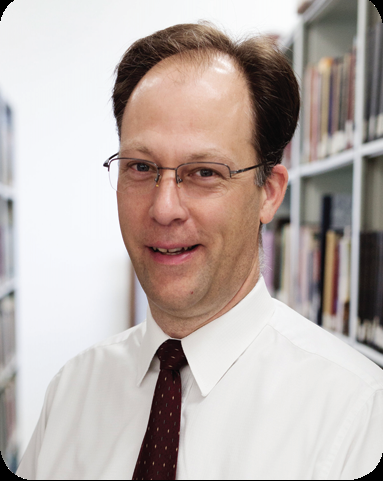
Rev. Richard Smit, pastor of Randolph PRC in Randolph, Wisconsin
Previous article in this series: April 1, 2024, p. 324.
In this article, we conclude our observations from the book of Acts that the early New Testament churches, established by means of the mission labors of the apostles, manifested in their institutional life the threefold Christian character of being self-governing, self-propagating, and self-supporting. In particular, we consider now that these churches were self-propagating and self-supporting.
After the history of the Jerusalem church at the end of Acts 2, newly established churches were self-propagating. Although this would be true of all the congregations established in the apostolic age, clear examples of this are the churches in Jerusalem and Antioch. They not only had the Word of God preached in their midst faithfully (Acts 2:42; Acts 11:26), but they also sent out preachers for the spread of the gospel outside their congregations. The church in Jerusalem sent out Peter and John to Samaria (Acts 8:14), Paul to Tarsus (Acts 9:30), and Barnabas to Antioch (Acts 11:22). The church in Antioch sent Barnabas and Paul on their missionary work (Acts 13:3-4) and then sent Paul and Silas on Paul’s second missionary journey (Acts 15:40).
The churches continued to approve and ordain ministers of the Word for the growing demand for preachers. A clear example of this is found in Acts 15:35, “Paul and Barnabas continued in Antioch, teaching and preaching the word of the Lord, with many others also.” Paul and Barnabas did not preach singlehandedly, but there were many others also who assisted them in the self-proclaiming work of the church in Antioch. Furthermore, the ordination of these additional preachers in the church of Antioch did not need the approbation of the church in Jerusalem, but the church in Antioch had the right to preach the Word through her own trained, approved, and ordained ministers of the Word. Later, the apostle Paul admonished Timothy and the church at Ephesus regarding the duty of the church to train new ministers of the Word in order to supply preachers to the churches and to the work of missions (II Tim. 2:2).
Regarding the characteristic of being self-supporting, the churches throughout Palestine and other areas in the Roman Empire, after the history of Acts 2, showed this equally important aspect of their threefold Christian character.
There is evidence that the churches faithfully supported the ordained ministers of the Word and sacraments. As the people of God were fed with the spiritual things of the Word of God, they in thankfulness to the Lord provided for the earthly needs of the apostles and other ministers of the Word. The apostle Peter was lodged by the saints at Lydda and by Simon, the tanner, at Joppa (Acts 9:32-43). He, along with the accompanying delegation, was lodged by Cornelius and his household in Caesarea (Acts 10:48). After Lydia’s conversion and the baptism of her and her household, Lydia provided lodging for the apostle Paul and his colleagues. Later, after their unjust imprisonment, Paul and Silas returned to the house of Lydia for continued lodging (Acts 16:15, 40). The Philippian church provided ministerial support to Paul even while he was laboring in Thessalonica (Phil. 4:16). Later, during his first imprisonment, Paul instructed the churches in Ephesus and Corinth that they provide their preachers their rightful and fitting ministerial support (I Tim. 5:18; I Cor. 9:14). Thus, the churches in the apostolic age learned and demonstrated that it was their sacred duty to provide financial support for their preachers so that they could devote themselves to the administration of the spiritual things of God’s Word unto the churches.
Further, there is evidence that the churches faithfully supported the poor with benevolence. The apostles and the churches in the Roman Empire understood their institutional work and duty towards the poor saints with benevolence through the work of deacons. This faithfulness to the support of the poor was shown in the church in Jerusalem. The care of the poor went so well that the Scripture records that “neither was there any among them that lacked: for as many as were possessors of lands or houses sold them, and brought the prices of the things that were sold and laid them down at the apostles’ feet: and distribution was made unto every man according as he had need” (Acts 4:34-35).
What happened when churches in a particular locality or region, due to some calamity or severe persecution according to God’s providence, were not able to support sufficiently the poor under their care with benevolence? Churches in the apostolic age supported other churches in times of calamity with inter-church, or inter-diaconal, benevolence assistance. When the famine that was prophesied by the prophet Agabus came to pass in Judea, the church in Antioch answered the great benevolence need of the suffering saints in Judea and Jerusalem: “Then the disciples, every man according to his ability, determined to send relief unto the brethren which dwelt in Judea: which also they did, and sent it to the elders by the hands of Barnabas and Saul” (Acts 11:29-30). Upon receiving the gift, the elders would have entrusted to the deacons the faithful distribution of the benevolence to those in need.
Years later, the churches in Galatia, Macedonia, and Achaia were admonished by Paul to give cheerfully to the need for benevolence, not only in their local churches, but also to the cause of benevolence for the poor saints at the church in Jerusalem (Rom. 15:25-27; I Cor. 16:1-3; II Cor. 8-9). This inter-church, or inter-diaconal assistance, for the work of benevolence helped the poor saints in Jerusalem so that they had their own daily bread and could continue to support their own preachers according to their duty.
The need for the churches to support the poor under their care was emphasized by the apostle Paul when he gave his farewell remarks to the church of Ephesus upon his departure at Miletus. Paul said, “I have shewed you all things, how that so laboring, ye ought to support the weak, and to remember the words of the Lord Jesus, how he said, It is more blessed to give than to receive” (Acts 20:35). The church in Ephesus was given the grace to adhere to that instruction. As a result, the Ephesian church was observed and remembered by Paul, not only for their faith and knowledge of the truth in the Lord Jesus, but also for their love unto all the saints, which love would have included their benevolence support for their needy, fellow saints (Eph. 1:15).
These biblical examples from the history of churches in the apostolic age are an encouragement for Protestant Reformed foreign missions. This is an encouragement that the labor of foreign missions continues to aim towards the goal of newly formed mission churches, subject to the Lord’s will and blessing, that embrace and demonstrate their three-self autonomy under and in the service of our Lord Jesus Christ. As demonstrated before, but worth repeating here, that aim stands in harmony with the Belgic Confession, Article 30, regarding the goal of instituted churches, with the three church offices, demonstrating its threefold Christian character of self-government, self-propagation, and self-support.
We believe that this true church must be governed by that spiritual policy which our Lord hath taught us in His Word; namely, that there must be ministers or pastors to preach the Word of God, and to administer the sacraments; also elders and deacons, who, together with the pastors, form the council of the church: that by these means the true religion may be preserved, and the true doctrine everywhere propagated, likewise transgressors punished and restrained by spiritual means: also that the poor and distressed may be relieved and comforted, according to their necessities.
When this goal is pursued by faith within faithful labors and much prayer, then foreign missions may know and be assured of the Lord’s blessing upon its work towards native, Christian, distinctively Reformed churches who are from their outset self-governing, self-propagating, and self-supporting. For the attaining of that goal, faithful missionaries may trust in Jehovah and His indispensable blessing that He will make those labors effectual by the wondrous power of His Holy Spirit (Ps. 127:1). Jehovah will do that for the ingathering of His church, through His daily and pre-determined additions of believers, in His time and according to His purpose (Acts 2:47).
Accordingly, then, let foreign missionaries, as they are lawfully sent by the church to their specific field of labor, go and tell!
Declare his glory among the heathen, his wonders among all people. For the Lord is great, and greatly to be praised: He is to be feared above all gods. For all the gods of the nations are idols: but the Lord made the heavens. Honour and majesty are before him: strength and beauty are in his sanctuary (Ps. 96:3-6).



