
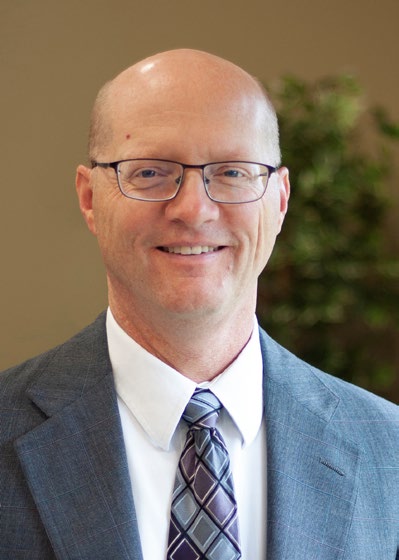
Rev. Kuiper is pastor of the Protestant Reformed Church in Randolph, Wisconsin.
In telling His church what kind of men her deacons must be, God sets a high standard.
We have examined this standard in the past several articles. The deacon must be full of the Holy Ghost, of wisdom, and of faith; he must hold the mystery of the faith in a pure conscience; he must manifest God’s inworked grace by living a blameless life, being grave, not doubletongued, not given to much wine, not greedy of filthy lucre; he must be faithful to one wife, ruling his children and house well; and his wife must be grave, not a slanderer, sober, faithful in all things.
One requirement must be noted yet—one which will also underscore how high the standard for deacons is. We read in I Timothy 3:10: “And let these also first be proved; then let them use the office of a deacon, being found blameless.”
We have already examined the idea of the deacon being blameless (cf. SB October 1, 2001). But how do we know if a man is blameless or not? The answer is: prove him! Only after he is proved, and found to be blameless, may he be installed into office as a deacon.
We should be clear on what is meant by this proving, and how it is done.
To prove something is to test it, examine it, try it, to see if it is genuine.
We often use the word “prove” with reference to metal ore. Gold ore, for instance, contains many impurities. To remove them, so that one can have pure gold, one puts the ore through a fire. The fire removes the impurities by burning some up and by melting the gold so that other impurities can be removed from it. That which is left behind is genuine gold—it has been “proved” to be such.
Scripture also uses the word “prove” with reference to God trying our faith (James 1:3, for example). Persecution, for instance, is a means by which God proves the members of His church on earth, to make known whether or not their faith is genuine. The fact is that to have one’s membership in a Christian church does not mean one is a child of God; in the church are also unconverted unbelievers. From time to time God sends persecution or other afflictions upon His church. Persecution causes those who are not truly God’s children to leave the church, and it strengthens the faith of those who are.
We see that proving something, in the sense in which the word is used in our text, results in a separation between that which is genuine and that which is not.
Now the Holy Spirit in our text requires that the church prove men for the office of deacon. There are many men in the church; but do not think that all of them are qualified to be deacon! A process of proving must take place, to know whether one is fit to be a deacon or not. Some men, when proved, are found not to be blameless. They may not be put in office. Others are found to be blameless; they are qualified.
The point of the passage is not to require a formal, oral examination of prospective deacons, in the way in which candidates for the ministry are examined. According to Peter Y. DeJong a certain Jacobus Koelman did argue that the text required such an examination:
Thus before anyone might be publicly installed he would have to submit to an examination on doctrine, conduct, and general knowledge of the nature and functions of this office. This was to take place before the elders and deacons who already held office in the congregation.1
Reformed churches have not adopted this idea, however. John Calvin says rightly, “This trial is not for a single hour, but consists in long experience.”2
Some have argued that this proving is accomplished by allowing the prospective deacon to begin doing the work of the office on a trial basis for a period of probation, after which a final determination is made regarding his ability to do the work.3 The problem with this idea is twofold: first, a man must not be put into office until after being examined, according to this text (“then let them use the office of a deacon,” emphasis mine, DJK); and second, in such an examination the emphasis shifts from the qualifications of the man, to whether he does the work well. But the text requires the church to examine whether he be qualified for office. If he is qualified, and if God calls him to the office, he will do the work well, by God’s grace.
The best way to fulfill the requirement that a deacon first be proved is simple: councils must evaluate each man whose name comes up for the office, whether he is truly fit for it or not. The men of the council must discuss the person amongst themselves, in confidentiality but also in true love for that person and the church. The question must be openly and honestly faced: “Are there reasons that can be brought forward why such a man is not qualified for the office?” So DeJong writes:
Undoubtedly this passage refers to one of the responsibilities which rests upon the consistory at the time of making nominations. The church must be assured that those who are appointed to this work possess the gifts of wisdom and gravity so highly essential in the diaconal ministry.4
Of course, the standard of God’s Word, in I Timothy 3:8ff. The council must ask itself whether the prospective deacon measures up to these qualifications. DeJong says:
A warning ought to be sounded against the rather prevalent attitude that any young man who is a member in good and regular standing and possesses a measure of business acumen has the necessary qualifications for the ministry of mercy. Often the hope is expressed in such cases that because the deacon’s work is not too difficult such a candidate if elected will soon be able to perform the work suitably. This, of course, is contrary to the spirit of the text of Scripture.5
Nothing other than the qualifications of Scripture are the standard!
In this connection, note one qualification which we have not yet examined: the deacon must not be a novice.
It might seem at first that Scripture nowhere makes this requirement of deacons. Of the elders, not the deacons, we read: “Not a novice, lest being lifted up with pride he fall into the condemnation of the devil” (I Tim. 3:6). However, the Spirit refers to this verse just quoted when in verse 10 He says of deacons: “and let these also first be proved.” Notice: “also!” That is, just as men who are relatively new to the faith should not be put into the office of elder, so also men who are relatively new to the faith should not be put into the office of deacon—prove them first! A person who recently joined a congregation might appear to have the natural and spiritual gifts necessary to hold the office of deacon, but not actually have them. After some time, as the council and congregation observe the individual and get to know him better, they will be able better to determine whether or not he has the necessary qualifications.
Does the requirement that a deacon first be proved, and that he not be a novice, mean we should impose a minimum age requirement on deacons?
Some have imposed such restrictions on deacons. The Council of Carthage in 397 decided that deacons must be at least 25.6 James Barnett defends this:
This age allows time for individuals to gain sufficient maturity and Christian formation to make responsible decisions in so weighty a matter and yet at the same time be young enough for their patterns of living to be shaped more readily in this ministry.7
In 1967, Pope Paul VI fixed the minimum age at 25 for single men, and at 35 for those men who were married. The Catholic Bishops in the United States went a step further by requiring all deacons, whether married or not, to be at least 35. The American Episcopal Church in 1952 set the minimum age at 21.8
When a Reformed person hears that this is the rule of the Roman Catholic Church, he might be tempted to see this as one more way in which precept has been added upon precept, and in which churches have gone beyond that which is required by God. Perhaps it is another instance of such, in the particular case of the Romish church. However, the church of Jesus Christ is free to set guidelines in this regard, if her purpose in doing so is to guide her in being faithful to the requirement of Scripture. Some of our churches have done essentially the same thing, in requiring that a man be a member of that congregation for a certain period of time before being considered for office in the church. The ground for this requirement is found in the Word of God, “And let these also first be proved.”
Even if we do not set a minimum age limit in stone (and I think we ought not), the fact is that councils do well to consider the age of a man when determining whether or not he is qualified.
A danger that must be avoided in considering a man’s age is that we say of a prospective deacon, he is too old, let us consider him for elder, and find younger men to fill the office of deacon. No support can be found in Scripture for a notion that the deacons should be the younger men of the church. Let the deacons also be proved to be mature men.
Maturity is the real issue, then. We must ask about a man’s age, because it is one indicator of his maturity. Admittedly, it is not the only indicator—that is why putting a minimum age limit in stone would not be helpful or wise. One man might be mature enough at the age of 24 to hold the office of deacon; another might not be mature enough even though he is 42.
And not just physical or intellectual maturity, but spiritual maturity, is the real standard. He must be found to be blameless. Is he found to be that in all his life? Is his walk godly in every respect? Is his theology sound? The real point of the qualification “let him first be proved” is that, not just any man, but only the best, be selected for the office of deacon. So Calvin succinctly states the point of the passage when he says:
In a word, when deacons are to be ordained, the choice must not fall at random, and without selection, on any that come to hand; but those men are to be chosen who are approved by their past life in such a manner that, after what may be called full inquiry, they are ascertained to be well qualified.9
Councils, is this your desire, that when you nominate men for the office of deacon you settle not just for the mediocre men, with the best being selected for elder; and not just for the younger men, with the older ones being selected for elder; but you select the best men for both offices? That is how God would have it!
In light of this requirement that the deacon be proved, some words of advice are in order for any man who desires the good work of the office of deacon in his particular congregation. First, get to know the people of the congregation, and show them that you love them. Attend the Bible Studies regularly, prepare well for them, and contribute wisely. Talk with the people of God after church; mingle in different groups; and let your talk be on spiritual subjects. Show a concern already for those who are ill or in need.
Second, be a godly man in all of your life, even at work, or on vacation, and at other times when the church’s leaders and members will not notice you. Let the world see that if your congregation selects you for office, you are a man fit to serve!
Third, make it your business to read and study on your own. A deacon must be a theologically sound man!
Finally, do none of the above, if you will not do it from a sincere heart. This advice is not intended for one who looks only at the earthly honor and power he could have in the church if he holds the office of deacon, and who is therefore looking for the best way to campaign for that office. Such a man is singularly unqualified for the office! The advice is for the man who desires to serve God and His church in this office. Then do the things mentioned above, and you will prove yourself fit to serve.
1.Peter Y. DeJong, The Ministry of Mercy for Today (Grand Rapids, MI: Baker Book House, 1963), page 101.
2.Cf. Calvin’s commentary on I Timothy 3:10.
3.Charles W. DeWeese, The Emerging Role of Deacons (Nashville, TN: Broadman Press, 1979), page 74. DeWeese does not say that he personally takes this view, but he says that some Baptist churches do.
4.DeJong, op. cit., page 101.
5.DeJong, op. cit., page 102.
6.Cf. James Monroe Barnett, The Diaconate: A Full and Equal Order (Valley Forge, PA: Trinity Press International, 1995), page 182.
7.Ibid., page 182.
8.Cf. Jeaninne E. Olson, One Ministry, Many Roles: Deacons and Deaconesses Through the Centuries (St. Louis, MO: Concordia Publishing House), pages 358-359, and page 367, as well as Barnett, page 182, for this information.
9.Cf. his commentary on this passage.

