
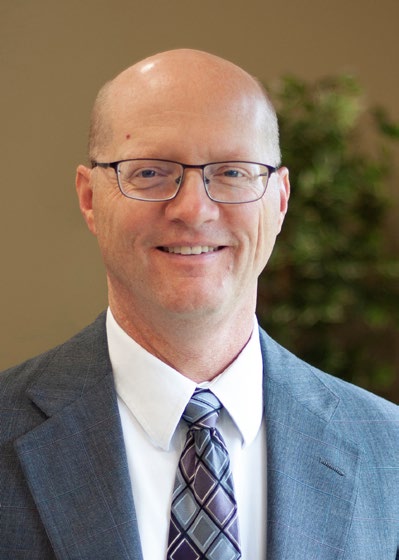
professor of Church History and New Testament in the Protestant Reformed Theological Seminary, and member of Trinity PRC in Hudsonville, Michigan
Romans 12 and Ephesians 4 are two of several New Testament passages that speak of the church as Christ’s spiritual body. This beautiful figure suggests that:
But what is the minister’s relation to Christ’s body, the church? Romans 12:1-8 and Ephesians 4:7-12 enable us to answer this question.
THE THREEFOLD RELATION
First, the minister is a member of the body of Christ. Paul, an apostle, includes himself as a member of Christ’s body: “So we, being many, are one body in Christ” (Rom. 12:5). In Ephesians 4:11-12, he teaches that God gives some the gift of pastors and teachers. The gift is given within the body; pastors and teachers are part of it.
This point is worth emphasizing. It explains why the following two points regarding the minister’s relation to the body can be true. It also explains why the minister’s relationship to Christ’s body is a positive relationship. If the minister were not part of the body, his relationship to it might be antagonistic or mechanical, but would not be one of mutual service and benefit. It also drives home that the minister is, in every respect, just like the ones whom he serves. As I read elsewhere recently, the minister is himself a sheep, and smells like a sheep.
Especially the point is worth emphasizing because it drives home that the minister, like the other members, is part of the body by God’s grace. In grace, God gives us an office; but also in grace, He gives us to be members of the church. We are members on the basis of Christ’s atoning work, for as sinners we are unworthy. We are members because the Holy Spirit applies the life and benefits of Christ to us. This Spirit not only equips us to be ministers, but bestows the spiritual gifts on us by which we serve the body (1 Cor. 12:13).
Of this wonder ministers must always be profoundly conscious and grateful. Our own holy walk and communion with God is motivated by this. Our godliness is not merely a qualification for office; it is an inworked grace that God gives to the body’s members. We must be profoundly conscious of this in our pastoral work. When building up a member of the congregation in the assurance of his or her faith, pointing to the finished work of Christ and the Spirit’s work in us, we must know the wonder of which we speak.
But have not some served in the ministry who apparently were not converted believers? In fact, some have. It is possible that, in the history of the Protestant Reformed Churches, several have. They are like King Saul, whom God used for a time for Israel’s well-being, but whose hatred of David and self-seeking demonstrate that things were not well with his soul. Such ministers can preach the gospel, by which the congregation is built up, but cannot preach it with passion and conviction.
The minister is reminded that the gospel’s call to faith, repentance, and obedience—which gospel we are to issue to others—comes first of all to the minister himself.
Second, the minister serves the body. God recreated every member of Christ’s church in order to serve the body. Ephesians 4:11-12 notes that God gave some “pastors and teachers” for the body’s well-being.
The specific form that our service takes is that of teaching. The body needs instruction continually. Those young in faith must be taught in order that they grow; those mature in faith must be taught in order that they remain healthy. We may not conclude, if our congregations are mature and well grounded in Reformed doctrine, that it is more important that we lead in some other way than by teaching. Inherent in the existence of the office of minister is the task of the office: teaching. Though it was not John Calvin’s view of Ephesians 4:11-12, Reformed churches have viewed “pastors and teachers” as one group of men who pastor by teaching.
Yet the minister’s service to the body is not limited to his official work. As a person, apart from his office, the minister serves. We see needs of brothers or sisters that can be met in ways other than
teaching, though not at the neglect of teaching.
Third, the body serves the minister. Romans 12 and Ephesians 4 teach that every member of the body serves another. Because the pastor is a member of the body, he is served by others and must be ready to receive the gifts of others for his own advantage.
A carnal-minded minister envisions how the body serves him only in a carnal way. The church serves him by paying his salary, or by providing him a sphere of influence. After all, every teacher needs students. This is not what I mean when saying that the body serves the minister.
The body serves the minister primarily in that its members use their spiritual gifts for his spiritual advantage. After all, the minister has spiritual weaknesses too, and his gifts are limited. He has wisdom and knowledge, but is not all-wise or all-knowing. He needs the wisdom, knowledge, and other spiritual gifts that the members of the body have.
Ministers should remember this when coming to a conviction about where God would have us labor. When considering calls, we often ask where we are best able to serve at the moment. But in leading us to accept a call, the Lord is also showing us that we need the gifts that the members of that congregation have. Even the brother or sister who seems to make our work harder, has gifts by which we are served.
THREE IMPLIED CALLINGS
The first implied calling is that we ministers not think more highly of ourselves than we ought to think (Rom. 12:3). The danger is real and the warning is necessary. The minister is a prominent member of the body. We stand before our congregations in worship; we preside over the council meetings; our name is on the church sign; and often we rank among the most highly educated members of the congregation. Our prominence might make us think more highly of ourselves than we ought.
But prominence is not the same as preeminence. The former regards where God has put us in the body; the latter is a sinful desire to be first (3 John 10). Prominence without wisdom is folly; prominence without knowledge is disastrous. The nose is a prominent member of the body, but is not more necessary than the heart and lungs.
So Romans 12:3 gives us both a negative warning and a positive command. We are warned against thinking more highly of ourselves than we ought. While the church needs pastors, and God gave us those gifts, our personal gifts are not the greatest gifts the church has ever possessed. Positively, we must “think soberly.” In the Greek original, the word translated “soberly” is not merely a one-word adverb, but is a purpose clause: “think, for the purpose of thinking soundly, or of having a sound mind!”
The reason for the warning and positive command is that God has given every member of the body the gifts of faith. There is variation in the degree and in the specific form that the gift takes, but the value of the various gifts is the same.
So we go to Bible study, having prepared well, and find that some attendees have true insights into the passage that we had not seen. And we leave many a pastoral visit realizing that the one whom we visited ministered to our own soul.
The second implied calling is that we teach. So Romans 12:7: “or he that teacheth, on teaching.” Ministers must remember that this is our calling. We lead rightly by pointing the people to God’s Word.
The apostle is also exhorting us to diligence in teaching. To teach requires one to understand the subject matter clearly and present it carefully. This takes time.
Implied also is that we do our work to the best of our ability, confessing that God has given us our gifts with their weaknesses and limitations and that God has determined that we are the man He wants in a particular congregation at a particular time.
Every minister has a different degree of ability. In our ministry, we might notice two other ministers, or categories of ministers. Of one we stand in awe: they have more gifts, greater abilities, and more frequent opportunity to use them. Were we like him, our congregation would be better served! The other, we think, has fewer gifts, abilities, and opportunities.
We may not think this way. First, even if some have more abilities and others have fewer, it is not for us to judge these matters on the basis of outward appearance. Second, God requires faithfulness of all, in accord with the gifts He has given. Third, God is pleased to use us with the gifts He has given us; for that reason He raised us up.
The third implied calling is that we remember the goal of our work: “For the perfecting of the saints, for the work of the ministry, for the edifying of the body of Christ” (Eph. 4:12). God created the office of minister and provides men to fill that office in order to realize this goal.
The goal is to equip (the idea of “perfecting” here) the saints to serve each other and our Lord. Our work must aim at building each other up in faith and godliness. We do this by pointing the members to our Savior and emulating His love and holiness in our life.
In other words, part of our service to the body is that we teach each other how to serve, and why.
Who is sufficient for these things? How are we going to do this? In fact, the Holy Spirit will do this. But He does so through us as means. He will bless the means that He raises up. And when we, like Solomon, cry out to Him for wisdom (1 Kings 3:9), He answers our prayer (Jam. 1:5).
Brother, may God give you to remember the relation in which you stand to Christ’s body, to serve to His glory and for the church’s spiritual well-being, and always to view yourself as one who also needs the gifts of others. Thus may your service on earth and your joy be an anticipation of perfect service in heaven.
NOTIFICATION OF CANDIDACY
All Protestant Reformed congregations are hereby informed that the 2025 Synod of the Protestant Reformed Churches in America has declared Mr. Aaron VanDyke a candidate for the gospel ministry in the Protestant Reformed Churches. Candidate VanDyke will be eligible for a call on or after July 12, 2025.
Mr. VanDyke’s address is:
7302 Melody Lane
Jenison, MI 49428
Phone #: 616-818-8525
Email: airinvandyke@gmail.com
Douglas Mingerink, Stated Clerk



