
What is published here and in the previous issue (Feb. 1, 2023) is part of the history Mr. Cal Kalsbeek (retired Christian school teacher and member of Hope PRC, Walker, MI) wrote originally and primarily for the benefit of the descendants of his father, the late Mr. John M. Kalsbeek (1913-2005). We thank him for sharing some of the history he has researched and written concerning his family. Cal offered the following explanation to his family members: “It will soon become obvious to the reader that ‘Dad’ is the focus of what I have written. This happened largely because the vast majority of the material I had at my disposal was obtained from him in written or recorded form…. Readers should keep in mind that what you read is written from my perspective; thus when you read the words ‘Dad,’ ‘Mom,’ ‘Unc,’ etc., they are referring to those who are connected to me by that relationship.”
The Consistory minutes of Byron Center PRC from 1927 to 1937 demonstrate that Hessel’s move there resulted in a lot of work for him. Time and time again he was elected elder and would serve either as clerk or vice president. Dad’s diary of this period records many instances in which Hessel led reading services and served as a delegate to meetings of classis. For example Dad’s June 2, 1935 diary entry reads, “Pa (Hessel) is going to leave early tomorrow morning (about 3 a.m.) for Orange City, Iowa where he must attend classis.” Another entry informs the reader that a certain [worship] service was the first time Hessel sat with the family in eight years. Apparently, they did not have enough qualified men to serve as elders to make a rotation of officebearers possible, so Hessel served as elder for eight consecutive years and sat with his fellow elders.
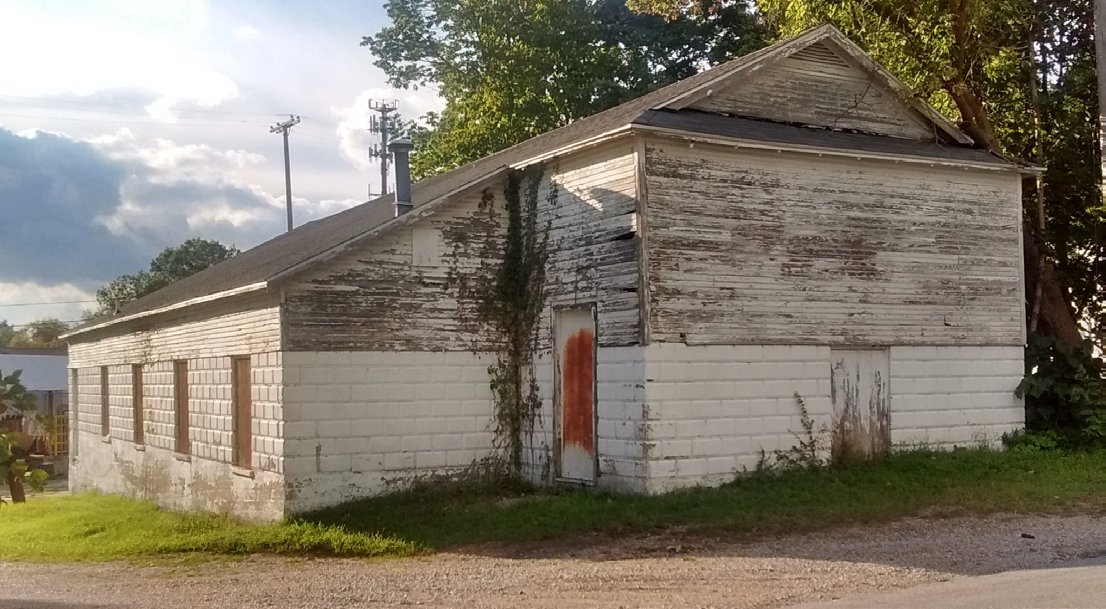
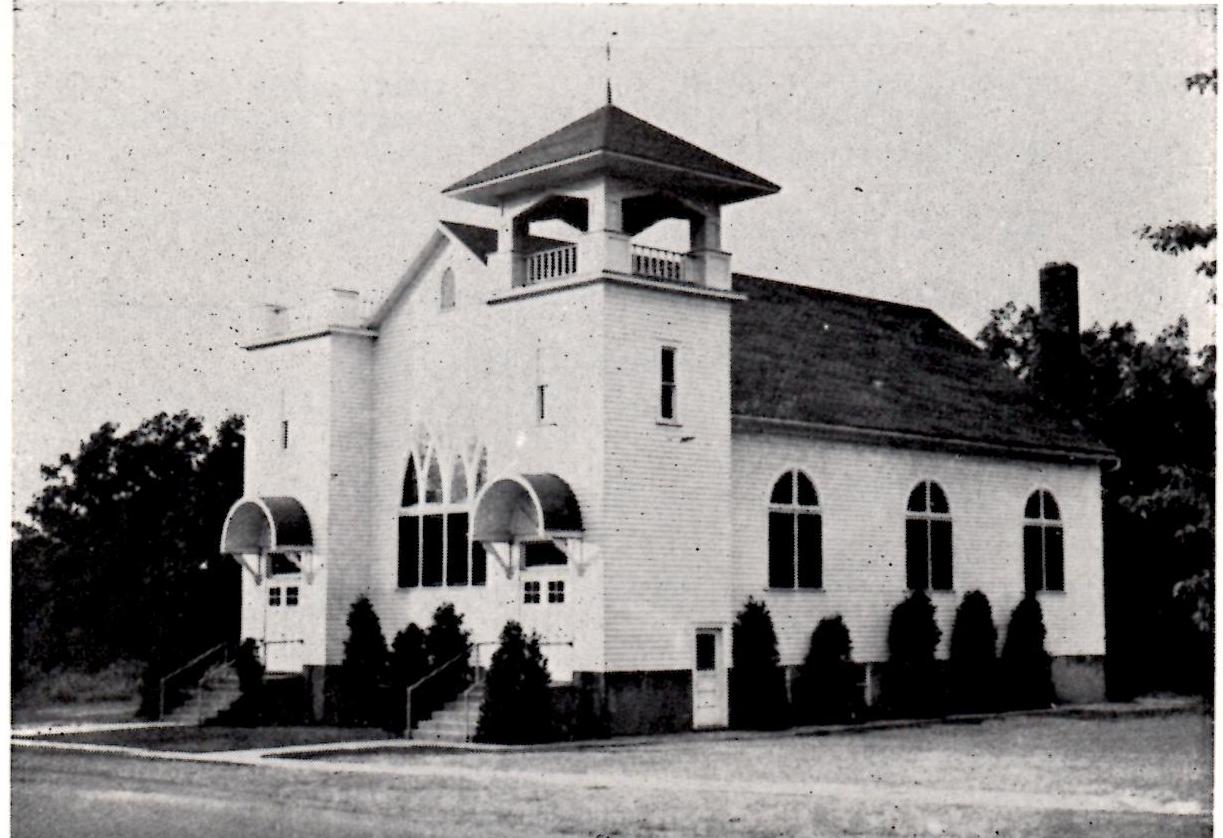
Hessel was not the only one of the family involved in the life of the church. Dad religiously reports in his diary of “…attending both services at the Hall,” “… went to the Hall twice for church. Sat close by the stove and almost roasted,” and “Went to the Hall to both English and Holland services” (cf. photo). Apparently they walked to church until Sunday, October 21, 1934. On that date Dad wrote: “Went to the Hall twice today with the car and it sure seemed great that we didn’t have to hoof it.” (On the previous Friday Dad’s folks came home with a 1929 Ford, for which they paid $115.) Also religiously recorded was his catechism attendance on Wednesday evenings in the parsonage basement. On one occasion they lost power and “…had catechism using a kerosene lamp.” On another occasion the catechumens “…received a good bawling out and lecture from the Reverend [George M. Ophoff] for failing to learn our questions better,” to which Dad added, “and I admit we certainly deserved it.”
But things were changing for the members of the Hessel DeJong family. They had lost the farm, and by 1937 factory work had been obtained in Grand Rapids: Hessel at Berkey and Gay Furniture, Chuck at Keeler Brass, and Dad at General Motors. While it was common for them to be laid off from work for limited periods of time, it was better than farm work in Byron Center. Also this worked out much better for sister Jenny who was a nanny for someone in Grand Rapids, where she would stay for the week and would sometimes come home to Byron Center on weekends. Consequently, a move to a new home in Grand Rapids was expedient and along with that they moved to a new church home. The Byron Center Consistory minutes of June 1, 1937 tell the story: “Mr. Hessel DeJong has asked for his and his wife’s and children’s membership papers to be sent to Roosevelt Park Protestant Reformed Church.”
Dad’s Roosevelt Park years: 1937-1939
On April 30, 1937 the Hessel DeJong family spent their first night in their ‘new’ home on 652 Hogan Street in Grand Rapids (near Clyde Park and Chicago Drive). Dad and his brother Chuck contributed $200 dollars for a down payment on the house which cost $2,600. To help us understand the activities of the Hessel DeJong family as they begin their sojourn on Hogan Street, we note their ages: Hessel, 48; Anna, 49; Dad, 24; Chuck, 20; Jenny, 19; and Grace, 11.
During these years the Great Depression was very much affecting everyone in the Grand Rapids area, including the DeJong family. Thus we discover from Dad’s diaries that their work was very uncertain. Layoffs were common. Looking for and finding work during these layoffs was part of their everyday life.
For Dad, an indefinite layoff at GM on May 18, 1937 meant finding work for Arie Ponstein in the Hope area “pulling radishes.” Then, on July 12, it was back at GM, riding to work with Bud Knoper (Dad’s future brotherin- law) “working in the press room smearing grease on the pieces of sheet metal before they are pressed.” Then, beginning in early 1938, he was laid off once again at GM and was left to look for work through various “employment bureaus,” but with no success. So it was back to work for Ponstein, or odd jobs for a certain Mr. Hogan, or working for Mr. Kooienga in the muck on Wilson Ave., or Ben Bosgraf in Hudsonville, or John Lanning clearing land on Wilson and Hall. Finally, on October 5, 1938, GM called him back to work for the 4 p.m. to 12:30 a.m. shift. But this only lasted until May, 1939, when he was laid off once again, this time for 4 months. Despite “union rumblings” at GM during this time, work remained quite steady in part due to the increasing war economy. The last Dad records regarding work is that “#5567 enters the play,” and as that number he is on the day shift working in “the electrical maintenance department.”
Work for Hessel and Dad’s half-brother, Chuck, followed a similar pattern. Keeler Brass was Chuck’s main place of employment, but layoffs also sent him to the farms with Dad. However, at one time they both applied for unemployment. For Hessel, layoff at the furniture factory meant working at Woodlawn Cemetery and finally for the WPA.1
In 1939 Dad’s half-sister Jenny quit her nanny work for the Hall family in Grand Rapids and began working at the Veltman Cookie Company. And last, but certainly not least, Dad’s half-sister, Grace, was still in school. After moving from Byron Center Christian School, it is likely that she attended Southwest Christian.
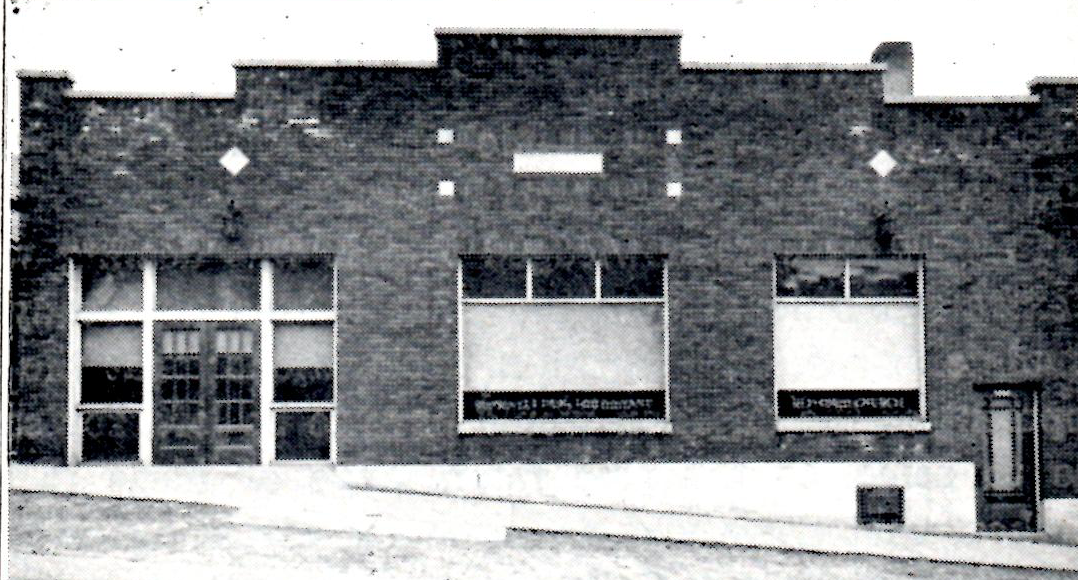
To understand some of what was involved in the church life of the Hessel DeJong family while living on Hogan Street, we need to relate a little of the history of Roosevelt Park PRC (later Second PRC and presently Southwest PRC). About the time the DeJongs began attending Roosevelt Park, the landlord of the church building (located on Chicago Drive near Clyde Park, cf. photo below), Mr. London, (also a member of the congregation) made some extraordinary demands of the congregation. That included the demand that they purchase the building for $15,500 and make payments higher than the congregation could afford during these Depression years. Consequently, the Consistory did some investigation and came up with an alternative plan in which Mr. William Kooienga would build them a new church at the intersection of Ellen and Rathbone Streets for $9,000. By adopting the Kooienga plan, however, it was necessary for the congregation to declare bankruptcy to get from under their contract with Mr. London, in whose favor the Michigan Supreme Court earlier had ruled, requiring the church to purchase the London-owned building and pay overdue rent. One result of rejecting this decision and declaring bankruptcy was expressed in the consistory’s follow-up letter to Classis East: “The corporate state of Roosevelt Park Protestant Reformed Church was dissolved. The present membership is now incorporated as the Second Protestant Reformed Church.”
The congregational approval of the church building program explains numerous entries in Dad’s diaries regarding his work in helping build the church. For example, on August 22, 1939 Dad wrote: “Put in another day at the church. Sat on
the roof all day nailing on roof boards; Dick Kooienga, Arie Ponstein, Bud Knoper and myself. Was quite weary at 4:30 p.m. quitting time.” Apparently, they made good progress, because on November 13 Dad helped install seats in the new church and on November 16, 1939 the church was dedicated. This means that for the first two years on Hogan street they worshiped in the Chicago Dr. building and the rest of the time at the new church on Ellen Street.
Dad’s early years at Roosevelt Park/Second PRC involved a number of significant changes in his spiritual life. Most significant was his attendance at catechism under his new pastor, Rev. Richard Veldman, and his subsequent confession of faith. About that event Dad wrote on March 27, 1938, “This morning the following made public confession of faith in our church. Mr. and Mrs. C. Cnossen, Katherine Cnossen, Henrietta and Bud Knoper, Mart Bult, Bernard Elzinga and John Kalsbeek. I stood between Bud and Bernie, both over six-feet tall, and of course I felt small beside these giants. May we all by God’s grace always in principle live up to what we confessed this morning.” Dad later recorded partaking of the Lord’s Supper for the first time on May 1, 1938.2
There are other indicators that suggest spiritual growth in Dad’s life at this time. For one, he joined the Choral Society. In Dad’s words, on Wednesday, October 6, 1937, “…the unbelievable has happened, for John M. Kalsbeek was also there (Choral Society) tonight and expects to meet with them all winter. Figured on singing tenor at first, but changed to bass as soon as I heard the tenor voices in action. Though very unsteady at first, I got a little braver toward last and really sang out loud when I was positive that I had the right note. Am sure I wasn’t doing any worse than Mart Bult who sat next to me, which is encouraging.” Shortly after this, Dad joined the newly organized Young People’s Society, which met on Friday evenings.
Clearly, church life was very much an important part of Dad’s life during these years. He attended three worship services on Sunday (two in English and one in Dutch), Choral Society on Wednesday evenings and Young People’s Society on Friday evenings. On one occasion he even attended a worship service in Frisian at the Fourth Reformed Church, about which Dad wrote, “I enjoyed it very much.”
Thus we end this account whence it began; with the Frisians.
1 The Works Progress Administration was a social program of President Franklin D. Roosevelt to get people back to work during the Great Depression.
2 Dad was 24 when he made confession of faith. It seems back then they did this at an older age than we commonly do today.



