


I commend unto you Phebe our sister, which is a servant of the church which is at Cenchrea: That ye receive her in the Lord, as becometh saints, and that ye assist her in whatsoever business she hath need of you: for she hath been a succourer of many, and of myself also. Romans 16:1-2
Lists of names in Scripture have great value and importance. We often have the tendency to view these lists as laborious and insignificant, but the opposite is true. Examples include the lengthy lists recorded in Ezra and Nehemiah, where names of returning captives point us to a faithful God who keeps His covenant promises.
An extensive list of names in the New Testament is found in the greetings of Paul in Romans 16. A grand treatise on the doctrines of grace in Romans concludes with Paul’s demonstration of care to all churches and their members through Christian greetings (Acts 19:21; II Cor. 11:28).
For this reason, the names recorded in Romans 16 are significant. Because travel was common in the Roman empire, Paul could be well acquainted with many members of a church of which he was not directly involved in establishing.
Thus, too, our confession of the inspiration of Scripture by the Spirit means that our God knows precisely what the church needs for all ages.
And this final chapter of the letter that declared the power of God unto salvation (Rom. 1:16) began with a simple commendation of a woman named Phebe, the one who delivered this powerful letter.
Paul “commends” her to the church at Rome. This means that she was approved by the apostle for the important work of being a letter-carrier, but also because of her spiritual example in the church at Cenchrea.
As the map indicates (cf. next page), Cenchrea was on the eastern side of the isthmus of Corinth, a prominent city in the Roman empire as the center of commerce and trade. Ships and goods were transported across the isthmus, a distance of about four miles.
As was often the case in Paul’s missionary work, a local hub was established by which the gospel would go forth into other communities. This was true for Paul’s work on his second missionary journey in Thessalonica and Philippi (I Thess. 1:7), as well as his expansive labors in Ephesus on his third journey (Acts 19:10). The same was true for Cenchrea, in which a small church was established through Paul’s eighteen-month labors in Corinth on his second journey in AD 52.
The only other reference to Cenchrea in Scripture is Acts 18:2, where Paul shaved his head as he took a vow prior to his return to Jerusalem at the conclusion of the second journey.
In His providence, and from this small community, the Lord used Phebe for the important task of delivering the original manuscript of Romans in AD 57.
Paul asked the Roman Christians to “assist her in whatsoever business she hath need of you” (Rom. 16:2). The word “business” used here could be translated as “matter” and is similar to the idea expressed in I Corinthians 6:1 where Paul rebuked the Corinthians for taking their “matters” (petty squabbles) to the Roman authorities through official lawsuits.
Nonetheless, something related to Phebe’s work prompted her visit to Rome, and God may have usedeven this to prompt Paul to sit down and write his letter. 1 This indicates that her involvement in a lawsuit proves she was not only someone of influence, but also likely a widow in the church at Cenchrea.
And Paul calls her “our sister.” What a beautiful description he gives to her! The testimony of Scripture is that the church is a family with Jehovah God as our Father. We have our blood lines and generations, but let us be cautioned not to forget our church family with its members being brothers and sisters in the Lord. The church of Christ is so named because our faith in Him unites us and can never be severed, while family can forsake (Ps. 27:10; Matt. 19:29). Phebe may not have known the Roman Christians personally, but together they were known by the Father in eternity, for in His good pleasure He elects a body of believers as His church.2
Now, as Phebe ventured to the largest city in the empire, she had Paul’s commendation, through this simple greeting, that she was one with the Christians in Rome. This would have sustained and encouraged her on her journey into an unfamiliar place.
Paul also calls her a “servant of the church.” It is possible that the word “servant” here in Romans 16 could create some challenges for Christians who maintain that God’s design is for men to hold the special offices in the church of Christ. The reason is that the word “servant” can be translated as “deaconess,” and some cite this as proof for having female deacons in the church, for Phebe was a “deaconess” in the church at Cenchrea.
However, without too much difficulty, we can see that this same word “servant” is used in several other places in Scripture. An example is John 12:26 where the Lord says, “If any man serve me, let him follow me, and where I am there shall also my servant be.” It clearly would not make sense to translate this word “servant” as a “deacon.”3 In addition to the testimony of other Scripture passages stating otherwise regarding the role of women in the church, Christians must confidently maintain that the special offices are for men (Acts 6:3; I Cor. 14:34; II Tim. 2:11-12).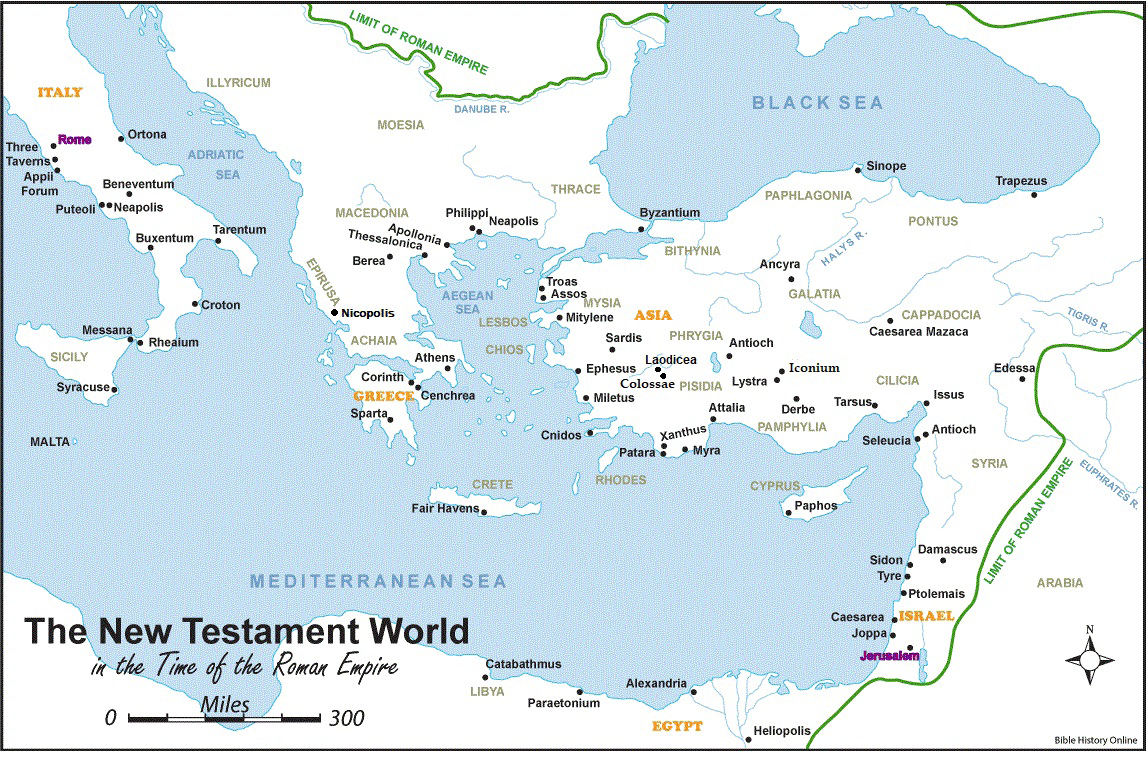
While Phebe may not have been an officebearer in the Cenchrean church, she played a necessary role in the church as she ministered and showed compassion to her church family.
To ensure that the Romans treat her as a fellow saint and recognize her ministering spirit, Paul asks them to “receive her in the Lord, as becometh saints” (Rom. 16:2). Phebe had further confidence that she would be well received by the church. The apostle Paul, as the leader of the missionary program, used the closing chapter of this letter to specifically greet these fellow Christians, and testify to Phebe’s position as one with them in the faith.
For this is what saints are called to do. It “becometh” them. As a family of brothers and sisters with our elder Brother, we must care for one another in whatever means the Lord is pleased to use, and in whatever diverse circumstances we identify in others. For Phebe, it was traveling a long distance to Rome with assurance that these Christians would welcome her as a member of their own spiritual family.
The final description of Phebe is that she was a “succourer of many, and of myself [Paul] also.” The word “succourer” could have any number of meanings for Phebe’s role in Cenchrea, but it certainly has the idea of a “patron,” someone of influence and wealth.4 Like Lydia in Philippi, Phebe showed hospitality to the missionaries that was of both physical and spiritual significance. In addition, Phebe’s home in Cenchrea may have been used for home worship, as was common in other places of the New Testament (Acts 16:40; Rom. 16:5; Col. 4:15; Phile. 2).
As was the case with so many in the life of Paul, God used faithful men and women to support his mission of spreading the gospel. The Lord uses means, and Phebe was powerfully used in both Cenchrea and Rome for the spiritual well-being of those churches. And her example is powerful for the church of all ages, too.
She was faithful to her task of delivering the letter to the Romans. The Spirit used this means, too, to bring such important clarity and distinctiveness of the doctrines of grace to this relatively young church living in a wicked and perverse city.
And now imagine this scene in AD 60. Paul’s perils on his journey to Rome were over. He arrived as a prisoner through shipwreck and adversity. He came to appeal his chains to Emperor Nero. But he also came to fulfill a desire that Rome be a new hub for future mission work (Acts 19:21; 23:11; Rom. 15:24, 28).
And upon his arrival he was received with open arms by the church at Rome (Acts 28:15). No doubt immediately within their fellowship they discussed the power of the gospel unto salvation as developed by inspiration through Paul’s letter to them.
“And what of Phebe our dear sister?” Paul may have asked, for not to be forgotten was this faithful letter- carrier.
Their response? “We received her in the Lord, for through your powerful commendation we recognized the work of Christ in her. We took her in as a member of our own church family, and mutually received rich, spiritual benefits.”
For it is faith, our bond to Christ, that unites us together as one family in Christ (Eph. 2:6; 4:5). Sin affects the cords of our earthly relationships, but our relationship with our covenant God stands firm and secure, and can never be severed!
Phebe: a faithful servant of the Lord, our own sister— an example for all Christians for all ages until our Lord returns.
1 Don Doezema, Upon This Rock, Vol. 3 (Grand Rapids, MI: Protestant Reformed Sunday School Teachers Association, 2003), 312.
2 Herman Hoeksema. Wonder of Grace (Reformed Free Publishing Association, 2021), 13-14.
3 Herman Hanko. Phebe: An Example for the Christian Woman (sermon date unknown). Sermon transcribed into pamphlet form by the Hope Reformed Witness Committee, date unknown (http://www.prca.org/resources/publications/pamphlets/item/594- phebe-an-example-for-the-christian-woman). For further study, the reader is encouraged to read this pamphlet; for it expands on some of the ideas in this article. It provides a beautiful explanation on the different roles of men and women in the church, but more specifically the high calling that God gives to women.
4 Holmes Rolston. Personalities Around Paul (John Knox Press, 1954), 95.



