

member of Faith PRC in Jenison, Michigan, full-time librarian/registrar/archivist at the Protestant Reformed Theological Seminary, and SB book review editor
The following book is reviewed by Prof. David Engelsma, former editor of the Standard Bearer, professor emeritus of Dogmatics and Old Testament in the Protestant Reformed Theological Seminary, and member of Trinity PRC in Hudsonville, Michigan
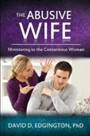 The Abusive Wife: Ministering to the Contentious Woman, by David D. Edgington. Phoenix, Arizona: Matthew 22:37 Books, 2015. Pp. 168. $14.99. Paperback.
When some years ago I gave the public lecture on spousal abuse in the Reformed community that to some extent opened up the reality of the evil in the Reformed churches, including the Protestant Reformed Churches, I introduced the topic with the assertion that abuse was almost always the sin that husbands committed against their wife and that the abuse of husbands by their wife was rare. I qualified the assertion with “almost.” But even as I spoke these words, I feared that I might be mistaken and that I was ignoring the reality among us of wives abusing their husband.
Succeeding years and subsequent information have convinced me that the abuse of husbands by their wife is not so rare as I then assumed.
I have erred.
At the request of one who knows the reality and misery of abusive wives by painful experience, I try here to make amends. I do this by reviewing a book on the subject that the person sent me and by commenting briefly on the evil raised by the book. Review of and reference to the book by no means imply agreement with all that it teaches, or even with the book’s style. There is, for example, a multitude of the author’s personal experiences, as a recognized counselor in the field. This way of treating the horrific subject has its effect, but the style is not mine.
The book corrects the mistake of assuming that abuse of husbands is rare in the Christian community. It also offers advice, often wise advice, as to how to recognize and deal with the evil in the church. Importantly, it calls for the church to take hold of the evil in her membership, as some pastors and consistories scandalously do not. It also gives biblical comfort to the suffering husband.
Although she often does resort to physical violence against her husband, trusting that he will not hit her back, the abusive wife usually injures, indeed murders, her husband with her demeaning, destructive tongue. According to Q. 105 of the Heidelberg Catechism, this abusive woman is a murderess. The author rather calls the abusive wife the “reviling wife,” which is the biblical terminology. “Shrew” is also an apt, expressive description of such a woman.
In support of its contention that the shrewish wife is not rare in the sphere of the covenant, the book calls attention to the frequency of the biblical warning of reviling wives, especially in the book of Proverbs. There, another description of such a woman is “brawling” (Prov. 21:8; 25:24). These passages are helpful in locating the reviled husband, if he cannot be found at home. He will be found seeking refuge from his wife in a corner of the housetop.
The author makes a compelling case for the pastor to always meet with both parties in instances of marital conflict. The author contends that never should the pastor or other counselor meet with the woman alone, that is, in the absence of her husband. The reviling wife is often a master of deceit, convincing the counselor that all the blame is her husband’s. By the time that the husband is brought in, the pastor has made his judgment against him, adding to the abused husband’s burden.
The book demolishes some common failures of pastors and elders in counseling. These include advising the husband to “love your wife more,” as though the fault is always his failure to love his wife; or, “man up,” as though the reason for his wife’s refusal to yield to his headship is his weakness.
There is reason to believe that the cause of the trouble in a marriage may well be the woman’s. One may not assume that the one at fault is the husband. It is an error to advise that the pastor or elder should always believe the woman and assume the guilt of the husband, even when the woman is petite and seemingly spiritual.
The considered judgment upon this reviling wife is damning: “she lacks empathy and appears to have no conscience. She feels no guilt over her cruel and reviling speech. She never apologizes and never asks forgiveness for what she has done wrong” (154).
Especially do I appreciate the admonition that the church, in the end, must exercise discipline upon the reviling woman, with the hope that God will use this extreme measure to bring her to repentance. Consistories may not simply give up when admonition and counseling fail to accomplish repentance, leaving the woman in her sin and the husband in his misery.
And, as is the heading of a chapter, “divorce is not an option.”
Neither, the author ominously finds it necessary to warn, is suicide
The following books were reviewed by Rev. Garrett Eriks, pastor of Unity PRC in Byron Center, Michigan
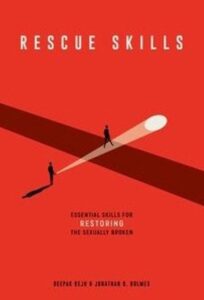
Rescue Skills: Essential Skills for Restoring the Sexually Broken, by Deepak Reju and Jonathan D. Holmes. Phillipsburg, NJ: P&R Publishing, 2021. Pp. 259 $16.00. Paperback.
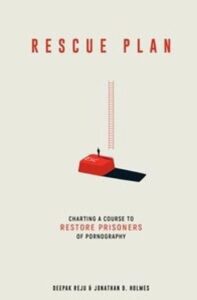
Rescue Plan: Charting a Course to Restore Prisoners of Pornography, by Deepak Reju and Jonathan Holmes. Phillipsburg, NJ: P&R Publishing, 2021. Pp. 241. $18.99. Paperback.
One of the greatest threats to the church today is pornography. This is not hyperbole. In fact, it might be the greatest threat to the present generations in the church. The statistics are staggering. According to the Covenant Eyes website, 51% of male students and 32% of female students first viewed porn before their teenage years. The average age of first exposure to porn among men is 12 years old. This problem is not just in the world, but it is also in the church. Among those who attend churches, 64% of Christian men and 15% of Christian women say they watch porn at least once a month (the Covenant Eyes website has many other sobering statistics about porn usage). So many men, women, and young people are becoming enslaved to this deadly bondage that is so easily accessible to them on their devices. You expect high porn usage rates in the world. But pornography is a problem in the church. Therefore, the church needs good, reliable, biblical resources to help in the battle against pornography.
Deepak Reju and Jonathan Holmes, experienced pastors and counselors, have provided these two comprehensive, companion books, Rescue Skills and Rescue Plan, to help the church in this great battle. These books are meant to be read and used together. Rescue Plan explains the big picture of the nature of enslavement to pornography and what it looks like in the life of a single person, a married person, and in a child/young person. Rescue Skills explains how to disciple a believer who struggles with bondage to pornography.
These books are written for those who are in the trenches of battle alongside those who are struggling with this sin. The authors write, “Our target audience is pastors, counselors, best friends, parents, small-group leaders, roommates, fellow church members, and really anyone who is coming alongside a friend who struggles with pornography” (Rescue Skills, 10). This reminds us of the calling in the church to be side-by-side with each other in our sin struggles. Certainly pastors and elders want to be used to help those struggling with these sins. But parents must have a heart to help their children and church members must have a heart to help fellow church members to walk the way of purity and godliness against these deadly attacks of the Evil one. These two books will provide the necessary resources for anyone in the church to help other members.
The highest compliment that can be given to books of this nature is that they are biblical. These two books are saturated with Scripture. At the same time, these books are the most comprehensive and practical that I have read regarding this sin and overcoming it. Because they are biblical, they are also gospel-centered and Christ-centered so that hope is provided for those struggling with this powerful enemy.
In Rescue Plan, the authors describe the bondage of pornography with the biblical verbiage of slavery, double-mindedness, foolishness, idolatry, and desires. With a deep understanding of this sin from experience and Scripture, the authors unpack the cycle of this bondage. With helpful alliteration, the four foes of the porn addict are identified as access, anonymity, appetite, and atheism. While no punches are pulled regarding the offensiveness of this sin against God and the neighbor, the books also explain how this sin affects the brain. They make use of science and recent discoveries about the effect of pornography on the mind, which is helpful for the addict and the counselor to understand.
The authors also tackle the often-avoided topic of masturbation in two chapters. In one chapter they demonstrate from Scripture that masturbation is wrong because it violates God’s design for sex in marriage between a man and woman. In the next chapter they provide many biblical and practical strategies to fight against this selfish sin.
In our day the church might buy into the myth that pornography is only an addiction affecting men. But porn usage is rising among women. Reju and Holmes identify the unique struggles of pornography for men and women and they encourage pastors especially to preach against this sin to men and women because silence about pornography use among women is hurting them. Women are especially ashamed of this sin in their lives because they are led to believe it is only a temptation for men. Therefore, the books are not only for those helping men, they are valuable resources for those counseling women as well.
The practicality of the books can be demonstrated in many ways, but here is one example. In the chapter dealing with young people who are struggling with pornography, the authors make the case for young people not dating while they are struggling with this bondage. Maybe you will agree or maybe you will not. But they make a strong case for it.
What will deliver someone from the bondage of pornography? These books do not provide a 12-step program to free men and women from this addiction. Instead, they provide a gospel-centered, Christ-centered, biblical rescue plan. It would be a mistake to pick up the books expecting to find a program only to modify behavior. Instead, you will find reading that is good for your own soul even if you have never battled this addiction because the focus is on Christ, the cross, and the beauty of God’s grace. The biblical doctrine of repentance is covered thoroughly so that the one helping the addict can help him/her understand what true repentance looks like. This section on repentance is helpful for any sin in the life of a believer. But also, they remind those helping the addict to point this person to the cross to see the beauty of God’s love. In this regard, one of the most powerful sentences in the books is this, “Sin is bad, but Christ is better” (Rescue Plan, 127). How true.
Each chapter of the book has at its conclusion a small gray box that includes something to reflect on, something to act on, and something to pray. These nuggets are helpful as a pastor, elder, or counselor puts together a unique way to apply God’s rescue plan to one struggling with pornography. This is exactly what it should be: Not a cookie-cutter approach or one-size- fits-all approach to dealing with pornography. The books are meant to be read slowly and digested. Then the reader puts together his/her own way of applying God’s plan to help someone who is struggling with this life-dominating, destructive sin. I must admit that at first I was disappointed that there was not a list or some steps to follow when counseling those caught in this trap. But then I saw the wisdom of their approach.
Because the books are gospel-centered, they are full of hope for those who feel hopeless in their sin. The authors point to the God of hope and the God of all comfort. This is a good reminder for us in our work with those who want to turn from sin and live God- glorifying lives—give them hope.
I encourage pastors and elders especially to read these books. But I also encourage counselors, parents, and all members of the church to read them. We need more discussions about this great evil that is plaguing the church. It will not go away by ignoring it. But more than this, we need to know that there is power to overcome this sin in the cross of Jesus Christ.



