
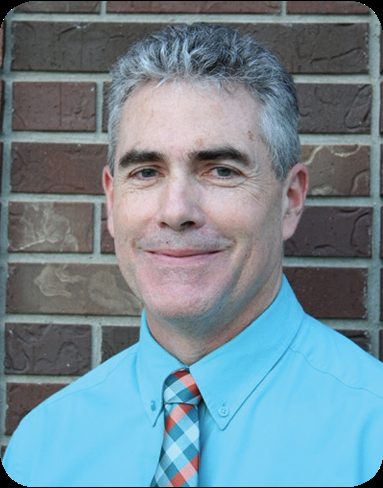
Rev. James Laning, home missionary in the Protestant Reformed Churches and member of Zion PRC in Jenison, Michigan
If a random group of those who attend some church were asked why they attend the specific church that they do, one would suspect that a relatively small percentage of them would make a reference to the marks of the true church. Some would perhaps mention their upbringing. Others might talk about the friendliness of the people, the activities that take place during the week, or the mission-mindedness of the people. Yet there would likely be relatively few who would mention the marks, with fewer yet being able rightly to say what those marks are. Yet it is important that we be a member of a specific church for the right reason. It ought to be because we are convinced that it is a church that teaches and truly holds to what Jesus taught.
Our Lord gave us specific instructions concerning what to preach, who is called to preach, what the sacraments signify and seal, who should receive them, how they are to be administered, who should be put under discipline, and how that discipline should be carried out. The church where we are a member ought to be one that faithfully follows these instructions. With this in mind, let us turn now to consider what Jesus has taught us concerning the marks by which His church is known.
The marks: The means and the keys
According to Article 29 of the Belgic Confession, the marks of the true church are as follows: “if the pure doctrine of the gospel is preached therein; if she maintains the pure administration of the sacraments as instituted by Christ; if church discipline is exercised in punishing of sin.” These are said to be the specific marks “by which the true church is known.”
One way to remember what the marks are is to think of the means of grace combined with the keys of the kingdom. The marks are the means by which the Spirit works and confirms faith. They are also the keys of the kingdom by which Christ opens the kingdom to believers and shuts it against unbelievers. The means and the keys taken together constitute the marks of the true church.
This makes perfect sense. The Spirit works faith by the preaching of the gospel and confirms it by the use of the sacraments. So undoubtedly both the pure preaching of the gospel and the proper administration of the sacraments must be marks of the true church. If the Spirit uses these to work and confirm faith, then certainly both of these will serve as marks by which the true church of Christ is known.
Furthermore, it is by the preaching of the gospel and church discipline that Christ opens the kingdom to believers and shuts it against unbelievers. An instituted church is a manifestation of the kingdom of Christ. Christ, the King of the church, uses these two keys to open and shut the kingdom. So, certainly, both of these must be marks of a true church, marks we should look for when considering where we ought to be a member.
The two means of grace and the two keys of the kingdom taken together come to three marks of the true church. The reason why there are three instead of four is that the preaching of the gospel is both the chief means of grace and one of the keys of the kingdom. Let us take a look at each of these marks in a bit more detail.
The pure preaching of the gospel
We start with the central mark of the true church: the pure preaching of the gospel of Christ. The church was called to go forth and teach all nations, baptizing them in the name of the triune God. Since that is what the church is called to do, the true church will be the one that is actually doing that.
Note also that Christ called the church to teach “whatsoever I have commanded you.” The true church, then, will be the church that is genuinely teaching what Christ has commanded her to preach. Though the truth may be unpopular today, as it has been in the past, the true church is the one that will continue today to teach the same doctrines that Christ has taught His church in the past.
Further proof for that is found in John 8. There we read that Jesus spoke to His disciples about the importance of continuing to hold to what He has taught them: “Then said Jesus to those Jews which believed on him, If ye continue in my word, then are ye my disciples indeed; and ye shall know the truth, and the truth shall make you free” (John 8:31, 32). Jesus said that those who continue in His word are His disciples indeed. It is easy to see the connection between being a true church and being Christ’s disciples indeed. What Jesus says here again places an emphasis on the importance of holding to what Christ has taught. It is those who continue in His Word, faithfully holding to and submitting to what He has taught them, who are His disciples indeed.
Christ’s sheep will be where they can hear the voice of Christ, their Shepherd. Jesus said that His sheep hear His voice: “My sheep hear my voice, and I know them, and they follow me” (John 10:27). Jesus says that His sheep hear His voice and know His voice: “And when he putteth forth his own sheep, he goeth before them, and the sheep follow him: for they know his voice” (John 10:4). Christ today is continuing to teach the same doctrines He has always taught. He does not teach one thing in one time period and something different in another. As the times change, the instruction Christ gives remains the same. Where you hear that instruction, that is where you are hearing Christ’s voice. And wherever Christ is, there you will find His bride, the church.
The proper administration of the sacraments
Let us now consider the proper administration of the sacraments as a mark of the true church. Before Christ ascended, He commissioned the church to go forth to the nations, preaching the gospel and administering the sacraments: “Go ye therefore, and teach all nations, baptizing them in the name of the Father, and of the Son, and of the Holy Ghost: Teaching them to observe all things whatsoever I have commanded you: and, lo, I am with you alway, even unto the end of the world. Amen” (Matt. 28:19, 20). When Christ here briefly summarizes the calling of the church, He mentions two subjects: teaching and baptizing. That serves to stress the central importance of preaching the gospel, first of all, and then also properly administering the sacraments.
The two clearly go together. The sacraments are visible signs of Christ’s saving work. So proper preaching about the saving work of Christ will go with a proper explanation and administration of the sacraments.
The flipside is also the case. The preaching of false doctrines goes with giving erroneous instruction concerning what the sacraments signify and who should receive them. More on that, Lord willing, later.
We proceed now to the third mark of the true church.
The proper exercising of church discipline
Church discipline is the third mark of the true church. A true church is one that not only preaches what is true, but also will not tolerate the preaching of what is false. This applies to both doctrine and life. The true church not only preaches rightly concerning what the living God calls us to do, but also disciplines those who do the opposite.
One place where we find instruction on church discipline is Matthew 18. In this chapter Jesus speaks to us about our calling to discipline the impenitent brother. We read that we are to go to our brother who has sinned and tell him his fault. If he neglects to hear us, then we are to bring with us one or two more. If he will not hear them either, then we are to tell the church: “And if he shall neglect to hear them, tell it unto the church: but if he neglect to hear the church, let him be unto thee as an heathen man and a publican” (v. 17). If he refuses to listen to the church, he is to be unto us as a heathen man and a publican. The implication is that the church is called to remove such an impenitent person from her midst, using the key power of church discipline. It is interesting to note the statement Christ made in the very next verse of this chapter. He had just spoken of the church’s calling to discipline the impenitent, and then He adds: “Verily I say unto you, Whatsoever ye shall bind on earth shall be bound in heaven: and whatsoever ye shall loose on earth shall be loosed in heaven” (v. 18).
This is the same language Christ had used earlier when speaking about the keys of the kingdom of heaven: “And I will give unto thee the keys of the kingdom of heaven: and whatsoever thou shalt bind on earth shall be bound in heaven: and whatsoever thou shalt loose on earth shall be loosed in heaven” (Matt. 16:19). The similarity of language here points to the fact that church discipline is indeed one of the keys of the kingdom.
Since Christ has given these keys to the church, we should be a member of a church that is rightly using these keys. In other words, church discipline, which is one of the keys of the kingdom, must also be one of the marks of the true church.
This third mark is clearly related to the other two. A church will not continue to preach the truth as she ought if she is not disciplining those who reject that truth. Secondly, the sacraments are not rightly being administered if they are administered to those who are walking in sin. So, if a church does not have the mark of church discipline, that will have a bearing on the other marks as well.
The church with these marks
What has been said thus far can be summarized this way: A church has the marks when she shows herself to be striving to follow the principles that the Head of the church has taught us in Scripture. That is how the marks are summarized in the Belgic Confession, which says the true church is known by this: “in short, if all things are managed according to the pure Word of God, all things contrary thereto rejected, and Jesus Christ acknowledged as the only Head of the church” (Art. 29).
If a church confesses that Jesus Christ is the only Head of the church, and shows that she makes that confession genuinely by striving to manage all things according to what the Head of the church has said, that church is a true church of Christ.
A true church is one that preaches what she does because she is confident that this is what her Head has called her to preach. She is a church that follows the instructions Jesus has given regarding the administration of the sacraments. It is one that makes sound decisions regarding discipline, not respecting persons in judgment, but executing the righteous judgment of Christ, following the instructions He has given us in Holy Scripture.
When determining where our church membership will be, these are the marks we are to consider.
These marks also serve to remind us of what our calling is as a church of Jesus Christ. May we in these last days faithfully follow the instruction our Head has given us. May we diligently proclaim what He has taught us, not only in our own country, but also to the nations. May we go forth as He has called us to do, joyfully doing the work He has given us to do, looking forward to that great day when He will return from heaven.



