
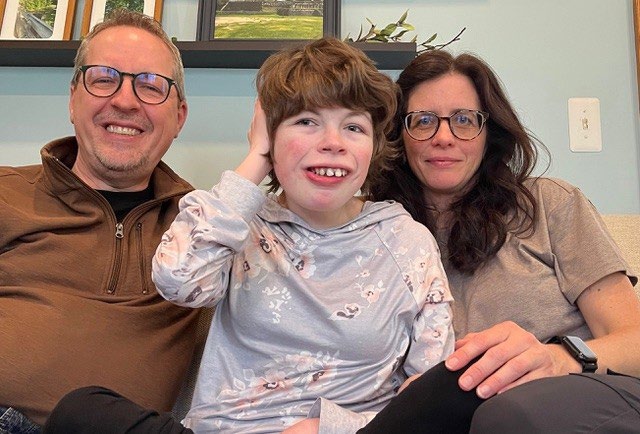
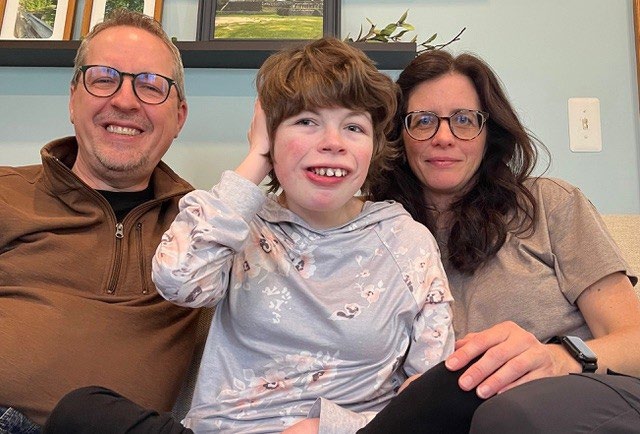
Have you ever prayed that God would give your unborn child a disability? Your answer to that question would probably be the same as the answer to this one: Have you ever prayed that God would afflict you with a disability? Disabilities are a part of the curse that came because of the Fall. We would not ask for them. What we do ask is that our Father would bring into our lives anything that serves our salvation and the grace to submit to His plan. Our family has experienced the amazing grace that only comes from God as we submit to Him. By grace we have seen His goodness to us in the life we have with a child that is severely multiply impaired.
Our daughter, Isabella Ruth, was born in 2007. In utero, it was discovered that she had a heart problem called atrial septal defect. She would need open heart surgery to repair it, but it would wait until she had grown because it was difficult to work on the small heart of an infant. A few days later, we took her home apprehensively, afraid we had a medically fragile baby to care for. We did not know then that she had another life-threatening condition. A few months later, she had the first of many similar episodes where her little body would go tense and she would seem to have trouble breathing for several seconds up to a few minutes. Sometimes she would even start turning gray. She also started falling behind developmentally. We wanted to blame her health problems on her heart defect but her cardiologist did not agree. When her heart was repaired with open heart surgery at 15 months and the episodes and developmental delays continued, we saw that the cardiologist was right. Some of her episodes brought us to the ER, which sometimes turned into overnight stays while more tests were run. I remember growing exhausted as the stress took its toll. In 2009 we were referred to a neurologist who ordered a muscle biopsy. He did not really know what he was looking for. The biopsy did give an answer to the questions we had, but it was a difficult answer. Isabella had a rare metabolic disorder called Pyruvate Dehydrogenase Deficiency. This is a neurodegenerative disorder caused by a deficiency in an enzyme called pyruvate, a crucial enzyme in the metabolic process of turning carbohydrates into energy. Her unprocessed carbohydrates cause a buildup of lactic acid in her blood stream causing seizures and eventual organ failure. In general, individuals who showed symptoms have died in childhood and currently there is no cure. We learned about a new treatment—a ketogenic diet that “tricks” the body to run on fat and protein instead of carbohydrates.
We spent the weeks following the day we received her diagnosis in a fog of grief. Suddenly, we had a new identity as parents of a special needs child. I did not want it. I wanted to have, love, and care for our daughter but I did not want to accept the fact that she would be severely impaired. Not only were we grieved about her impaired life, but we were also struggling with the knowledge that we might lose her. It weighed heavily on us day to day.
As the weeks turned into months and then into years, we learned more about the struggles of life with a severely disabled child. We were filled with pity for her as we saw how limited she was in being able to enjoy this earthly life. The joy of food was off limits for her. The joy of physical activity was not possible for her—she did not learn to walk until she was 4. The joy of communication was extremely limited for her—she has never learned to speak. It seemed she would have a life full of doctor appointments, medical equipment and procedures, and tough battles with every illness she acquired. Dentist appointments turned traumatic because she did not understand what was going on and would fight the entire time. Even worse, if her gums needed numbing, she could not understand that she should not chew on her tingling lip or cheek. Despite my efforts to hold on to her mouth while the numbness wore off, she hurt herself. She also became more isolated due to her inability to communicate and move about freely. While the lack of socializing never seems to bother her, it hurts us to see her more out of the community than in it. What joy could we share with her?
I struggled with self-pity as her mother. Every time I was confronted with the difference between Isabella and another child her age, my heart hurt. I was also very aware of all the eyes that turned to see my little girl who looked, acted, and sounded different. Awkward moments felt frequent in typical mom conversations as other moms would be sharing little joys and frustrations and suddenly realize that aspect of my life with my daughter was so different or did not even exist in some cases. I felt I was constantly being reminded of things that Isabella and we as her parents would never have. Even at home, we felt discouraged. As Isabella grew older, we could not share meals together at the table as a complete family because she was on a very strict diet and she would want our food. We have found it challenging to go places, especially as she got older. There is a lot of planning involved due to her diet and incontinence. Her limited mobility has made a lot of types of outings or vacations difficult or even impossible.
Over the years, these feelings have slowly changed. We can now answer the question: what joy? Our family grew; God gave us three more children whose lives are also affected by their big sister’s disorder. We needed to have the right heart towards God in this trial because we knew they would struggle as we had with self-pity, bitterness, jealousy, discontent, and other sins. We prayed for God to show us that He was indeed good. He helped us first by leading us to focus on glorifying God; He was worthy, no matter our circumstances. God has been so gracious to us in answering our prayers and gently showing us how this burden of Isabella’s disorder is being used for our good.
First, our rejoicing in the Lord grew. The verse “God is my portion” has more meaning to us because her limitations are what drives us to find our joy in Him. Our personal prayer life and family worship times have grown. We sing, read His Word, and pray together more often. To compensate for the separation at mealtimes, we began gathering in the living room as a whole family for longer devotions after the table was cleared. The Bible tells us that “fullness of joy” is to be found in His presence. As we were brought into His presence more often, we found that to be true. That joy of being in His presence will be more fully realized in heaven. What great comfort to know of the fullness of joy that will be hers when the Lord does bring her to Himself. Carrying the burden of the possibility of losing her any day compels us to grow closer to Him in preparation for that day.
Our trust in God grew. The experience of His good care of us now helps us to trust His future care. In the little things, from providing loving bus drivers, to giving her a love for fireworks (my birthday is the Fourth of July), God has proven repeatedly that He cares for us. Because the future seemed overwhelmingly fearful, we learned to live one day at a time, putting our trust in Him for today and leaving tomorrow’s fears in His hands. When we are confronted with how different she is from other girls her age, we remind ourselves that this was always God’s plan. It was never His plan for her to talk, hang out with friends, drive, date, or marry. But because this is His plan, we could trust that it is good, just in a different way. We prayed for the grace for her to trust Him and be aware of His goodness in this different life. He answers these prayers. Most people who see her out in public are immediately aware that she is severely disabled and they want to reach out to her in some way. They feel the need to make her happy, but they quickly learn she already is. We often hear others who have been around her comment in awe about how happy and content she is. This has not always been true. We did have difficult seasons when we felt she was not happy and had to search for the reason and make some changes. But overall, she is very content. We believe this is evidence that God has given her to see and trust His goodness to her.
We learned to focus on being thankful. Yes, there are many hard things that have come with the disorder but there are also good things on which we focus and for which we give thanks. Isabella is now 19 years old! She still acts like a two-year-old in many ways. Do we not all wish that our children would keep their cute little ways about them? Isabella has. She still looks at us with that sweet happy face of a toddler. She still wants her mama around all the time. She still gets into “little kid” trouble—emptying out boxes of Kleenexes, pouring a Costco-sized bottle of cumin out over her bed and playing in it like sand—and such like. She always makes it funnier with a little smirk and giggle when confronted. When she hears that her dad is home from work, she will yell “Boo!” from her room. That is her “hello” to him. Because of her, we have met many new friends. We are thankful for all the special joys she brings in all the aspects of her life. Thanksgiving also comes when we remind ourselves to consider what we deserve. Do we even deserve to have life? What right do we have to demand a certain kind of life? Should we not be glad to serve God in whatever circumstance He puts us in, out of thankfulness to Him for being saved from sin and death?
We have learned a new level of self-denial and have come to see that what God teaches us about losing our lives for His sake is true; in so doing, you will find your life. Daily life is full of her care. She requires assistance with everything: dressing, brushing teeth, showering, walking, and such like. She is incontinent and tube fed so our schedules revolve around her changings and feedings. We go through a 45-minute process of flushing her bowels every other day. She takes five different medications. Her diet consists of a shake that needs to be made fresh every morning. Because she has epilepsy, we are always on a certain level of alertness in case we must help her come out of a seizure with rescue meds. Because she has autism, she is very set in some of her routines. She also has a hard time being in crowds; she does not like her path to be interrupted. Lately, as a brand-new challenge, she has refused to leave places we take her. All these things cause us to groan a little as our plans are often ruled and affected by these behaviors. Repeatedly, we have to put what we want aside and serve God by helping and accommodating her. Repeatedly, we have experienced His blessing in serving Him in this way.
We love Isabella and all our children very much. God has done much to shape all of us through Isabella’s disorder. Dear reader, if you have been given a difficult trial, ask God to give you the grace to submit to that life and to see His goodness to you in that trial. Focus on glorifying Him in all things and we trust you will find that He will answer your prayers, perhaps in very similar ways He has answered ours.

