
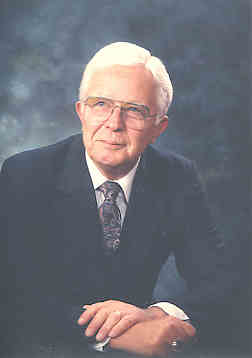
The later Homer Hoeksema was professor of Dogmatics and Old Testament in the Protestant Reformed Seminary.
In answering this question, we must remember the strict limitations of the question. Creation is a unique work of God. We cannot even know it, except by revelation. And the mere creature can never comprehend this act of God’s omnipotent will. When we ask this question, therefore, in the first place, we must bear in mind that it is not the intention of this question curiously to pry into the nature of God’s work or to ask how it. is possible that such a thing as creation could take place. In that respect there is but one position to take, and that is: God is the Almighty Sovereign and Lord, and He always acts as the incomparable God, not as the creature; He is the God who calls all things into existence by the act of His almighty will. And in that respect creation is like the miracles. You and I cannot comprehend them. They are altogether beyond the understanding derived from mere human experience. In terms of man’s work and man’s method of doing things and man’s use of means and man’s understanding, you cannot explain God’s work. God’s works are other. They are divine. We are simply confronted by them as the work of God who is really God. And thus it is also with the unique work of creation. We do not and we may not ask: Is it possible? And we do not and we may not ask: How can it be possible? We may only bow before the Word of the Scriptures. Through faith we understand that the worlds were framed by the Word of God, so that things which are seen were not made of things which do appear (Heb. 11:3).
In the second place, therefore, when we ask how God created, we ask that question in faith. We ask it in the framework of the Scriptures, in which God Himself has made known to us all that we need to know and all that we can know concerning His own wonderful work of creation.
Concerning this manner of creation Scripture informs us: “the Spirit of God moved upon the face of the waters.” This immediately reminds us of the truth that creation is the work of God triune, and that there is no separation to be made with respect to the work of God in the Holy Trinity. It is not simply thus, that the Father creates, and the Son redeems, and the Holy Spirit sanctifies – each working in separation from the other Persons of the Trinity. But all the acts of God are the acts of God Triune. Even as within Himself God lives and acts and had fellowship eternally as the Triune God, so all the activity of God out-going, in time, is the reflection of His activity within Himself. God is Triune. He is one in Being and three in Persons. And all the three Persons operate within the Godhead. The Father generates, and eternally knows and loves the Son in Himself. And so it is also in all the out-going works of God, of which creation is the first in time. God Triune creates. In that work of creation, therefore, the Father works, through the Son, and in the Holy Spirit.
This is confirmed by all Scripture. In the first place, not only does the Bible speak of the Spirit brooding upon the face of the waters here in verse 2; but repeatedly in the narrative of the successive days of creation Genesis speaks of the Word spoken. God spoke through the eternal Word, the Son, or Second Person in the Holy Trinity. This is the meaning when repeatedly we read in Genesis 1, “And God said….”
Moreover, in connection with the creation of man on the sixth day, while there is no specific reference to the three Persons of the Holy Trinity, there is nevertheless mention of a plurality of Persons in God when we read in Genesis 1:26, “And God said, Let us make man in our image, after our likeness.” Thus, we read also in the prologue of the Gospel according to John: “In the beginning was the Word, and the Word was with God, and the Word was God. The same was in the beginning with God. All things were made by him; and without him was not any thing made that was made” (John 1:1-3). Also in Hebrews 1:1, 2 we are instructed that the Son, by whom God has spoken to us in these last days, and whom He hath appointed heir of all things, is He “by whom also he made the worlds.”
This same truth from a slightly different viewpoint is beautifully set forth in Proverbs 8, which also makes it plain that creation in the beginning does not signify or presuppose a change in God, because God is not governed by time, but dwells in eternity; and all His works are with Him in His counsel eternally. Proverbs 8speaks of the eternal Wisdom which was with God before the world was, and which was present in the creation of the world. It tells us, for example: “The Lord possessed me in the beginning of his way.” And again: “I was set up from everlasting.” And again: “I was daily his delight” (Prov. 8:22– 31).
And in that beautiful passage of Scripture which speaks of the Firstborn of every creature, who is the image of the invisible God Himself, we read: “By him were all things created, that are in heaven, and that are in earth, visible and invisible, whether they be thrones, or dominions, or principalities, or powers; all things were created by him, and for him” (Col. 1:15, 16). Moreover, we read in Job 26:13: “By his Spirit he hath garnished the heavens.” And in Psalm 33:6: “By the word of the Lord were the heavens made, and all the hosts of them by the Spirit of his mouth.”
Hence, according to the text in Genesis, the Spirit moved upon the face of the waters. The original term here contains the idea of tremulously fluttering, or of brooding, as a hen upon her eggs. And the conception is that as the material of all things is present in the original waters, in the unformed mass of creation, the Spirit quickens and engenders life and energy in that chaos. In and through the Holy Spirit is the bond of life which unites the whole creation in fellowship with God.
And the Word separates and gives form to that creation. That God spake, and it was done, does not mean that He simply pronounced some kind of magic formula, and that creation is some kind of hocus-pocus. In creation the eternal and infinite Word of God proceeded outside of Himself, in the Spirit. And when through that Word, who is in Himself the eternal and infinite fullness of divine wisdom and thought, God speaks, He gives existence outside of Himself to all creation, a creation which is the revelation of His eternal thoughts, thoughts which through the Son He conceived in Himself form eternity to eternity. Thus God called the name of every creature – out of Himself, through the Son, and in the Spirit. And by speaking He separated from the chaos the creature which He thus named. The Father called; the Spirit quickened; and the Word gave form and separate existence to every creature, so that it might be the embodiment of God’s thoughts. When God made all things by the Word of His mouth, and all the host of heaven by His Spirit, He revealed Himself. He spoke. He spoke concerning Himself. And He spoke to us. The infinite Word of God proceeded out of His mouth in a manifold variety of concrete, created Words. The eternal Word went out into time. Creation as a whole, therefore, is a created Word of God, and all creatures are so many individual thoughts, words; and together they reveal the perfect and infinite Wisdom of the Most High. By creation, therefore, as an act of Self-revelation on the part of God, He makes Himself known as God who is God indeed, the God who is infinite in power and wisdom, and glorious in all His perfections.
The answer of Genesis 1 is that creation commenced “in the beginning.”
Let us be reminded once more, in the first place, that by this declaration of Holy Writ we are confronted by an amazing mystery, which can be known only by revelation. No historian can possibly take his starting point in this beginning. He may go back to ancient times, and he may carry his historical research into the remote past; but never will he be able to approach this beginning, the beginning in the absolute sense of the word. He cannot because he is a child of time, limited by time in all his conceptions. And one who should imagine that his mind had reached out into the beginning of which the first verse of Scripture speaks would nevertheless be forced to extend in his own thinking the mysterious line of time back of this beginning, and thus to give the lie to his own statement by the question, “And what was before this beginning?” A beginning before which there is no time, with respect to which it is even absurd to speak of a before, no human mind can possibly comprehend; and no mere philosophy and human science can ever approach this beginning.
In the second place, we must not conceive of this beginning in such a way that it took place and had existence without the will and creative power of God. It did not merely “happen.” When the creative Word first proceeded out of the mouth of God, time and the beginning of time were created. Time with all its change, time with all its succession of moments, time with all its advance toward an end, time with all its development, is itself a creature of God’s hand which came into existence by His almighty will and according to His eternal decree. And time is the creature which conditions the existence of all creation. It is in that time that the creature lives and moves and acts and develops, according to the counsel of God, and changes and increases and decreases and disappears, also according, to that counsel.
In the third place, that very term “in the beginning” points us already to the end, to the omega of all things. This world is not eternal. It had a beginning; and it shall have an end, when, in the day of Christ, the heavens shall be rolled up as a scroll, and the very elements shall melt with fervent heat, in order to make place for the new creation, in which heaven and earth and all things shall be united in and through our Lord Jesus Christ. The very term “in the beginning,” therefore, reminds us that, according to the counsel and will of God, the Creator, creation shall run through the course of history. It reminds us too, moreover, that while all created things were originally one harmonious whole and stood in their pristine perfection at the end of creation-week, nevertheless that first creation was not God’s final purpose. God had prepared a higher purpose and glory for the works which He created in the beginning. And that higher purpose was exactly that all things, both in heaven and on earth, should be united in Christ as the glorious Head of all creation and as the Head of His church, and that, too along the way of sin and grace. The relation between creation and Christ is such that Christ in the counsel of God is the Firstborn of every creature, who prepares the way for all the other creatures and is destined to be the Heir of all things. In that sense all things are created unto Him and through Him, according to Colossians 1:15ff.
In that same light, the relation between creation and redemption is such that creation was adapted by God to His purpose of redemption from the very beginning. Redemption is no repair work; and Christ is no afterthought of God. On the contrary, creation from the beginning is adapted to the final purpose of God’s counsel.
Hence, while according to that counsel and will of God it is indeed true that the original creation is one, so that one creature was adapted to the other, and so that all things, finally, through man, were adapted to God as man’s covenant friend-yet, according to that same counsel, all creation is also formed in such a way that it can become the stage for the tremendous battle of sin and grace and for the higher revelation of the virtues and praises of God in Christ as the Firstborn from the dead, and in the work of redemption through Him, and, finally, in the gathering together of all things in heaven and on earth in Christ. When God created the world in the beginning, He had the end, His eternal kingdom and tabernacle, in mind. To glorify Himself in Christ and the church and to perfect all things on the higher, heavenly level of the new creation – that is the original design of the Creator. When He created the first world, He had the final world in view. When He created the first Paradise, He did so with a view to the ultimate and everlasting Paradise of God. The first man, Adam, was made an image of the last man, Christ. The Creator is also the Redeemer, and He made all things with a view to redemption. Moreover, because this is true, creation is throughout Scripture the image of recreation, and the earthly is the image of the heavenly.
It is in this sense that we must understand the “beginning” of Genesis 1 as the beginning of all history, and in particular as the beginning of all sacred history.

